The sofa looked like it had inhaled the fire rather than burned. Springs twisted, fabric peeled back, a sag of blackened foam where someone normally curled up to scroll before bed. On the floor, near a puddle of melted plastic, a fire investigator crouched with a torch and lifted what was left of a charging lead – copper threads like singed hair, the plug still perfectly recognisable.
The story they pieced together was painfully ordinary. Evening TV, phone on low battery, charger tossed onto the cushions “just for a bit”, then forgotten. At 02:17, a neighbour called 999 after seeing orange flicker in the window. The family got out. The living room didn’t.
Across the UK, fire crews will tell you a quiet truth: sofas and beds are now two of the most common ignition points for phone‑related fires. Not because people are reckless arsonists, but because comfort has crept into places where electricity and foam should never have met. The good news is that a safer bedtime routine is disarmingly simple once you know what the investigators see in the ash.
The fire that starts where you sleep
When firefighters walk through a burned lounge, they are not just looking for where the flames were highest; they are looking for patterns. Melted synthetic fibres that drip rather than crumble. A scorched rectangle on the cushion that matches a handset. A charger with its insulation gone, teeth marks from a sofa spring pressed into the plastic.
In report after report, the script repeats: phone left charging on a sofa, armchair, or bed; cable pinched or twisted; device overheating but muffled by layers of fabric; occupants asleep when the first wisp of smoke appeared. By the time an alarm sounds – if there is one – the room is already full of toxic gases and the escape route passes right by the seat of the fire.
Sofas and mattresses are not passive décor. They are engineered stacks of foam, fibre and glue, many of them derived from oil, that burn hot and fast once they are persuaded to ignite. A phone that runs away thermally is exactly that kind of persuasion.
Why your sofa is the worst charging station in the house
A modern lithium‑ion battery is happiest when it can shed a little heat into the air around it. A sofa does the opposite. It wraps your phone in insulation and invites every bit of warmth to stay a while.
Soft furnishings also:
- Trap heat: Cushions, blankets and throws act like a duvet around the device and charger.
- Hide damage: A frayed cable, cracked plug or cheap adapter can spark unseen under the covers.
- Collect crumbs and dust: Fine debris becomes tinder when a component arcs or overheats.
- Move and flex: Sitting down, shifting cushions or dropping the remote can bend a lead at its weakest point.
Now add the overnight factor. At 1 a.m., there is nobody noticing that the phone feels unusually hot, or that a faint plastic smell has appeared. There is no quick hand to unplug, no window opened to clear smoke. Just a slow burn in a room full of fuel.
What actually happens inside that battery
Most of the time, your phone battery is a well‑behaved sandwich of materials shuttling ions back and forth. Things go wrong when that sandwich is punctured, overcharged, badly manufactured or forced to work while it is already too hot.
Investigators talk about thermal runaway – a point where a tiny fault causes heat, that heat triggers a chemical reaction, and the reaction releases more heat in a loop. At first it is just a hotspot. Then the plastic separators inside melt, cells short out, and the battery vents flammable gas. If that gas finds a spark or sufficiently high temperature, it ignites with alarming enthusiasm.
On a hard, clear, non‑flammable surface, a failing battery is still dangerous, but the damage is usually contained. On a sofa, it is surrounded by foam that can smoulder invisibly before bursting into flame. One investigator put it simply:
“Your phone turning itself into a blowtorch is bad. Your sofa offering to hold the flame for you is worse.”
A safer night‑time charging routine
Fire services are realistic. They know people will keep charging their phones at home, every day, often late. What they suggest is not abstinence, but a different rhythm.
Think of this as the evening pattern they wish more homes would follow:
Charge early, not overnight
Plug your phone in after work or dinner, not as you climb into bed. Aim to have it near full by the time you start winding down.Pick the right surface
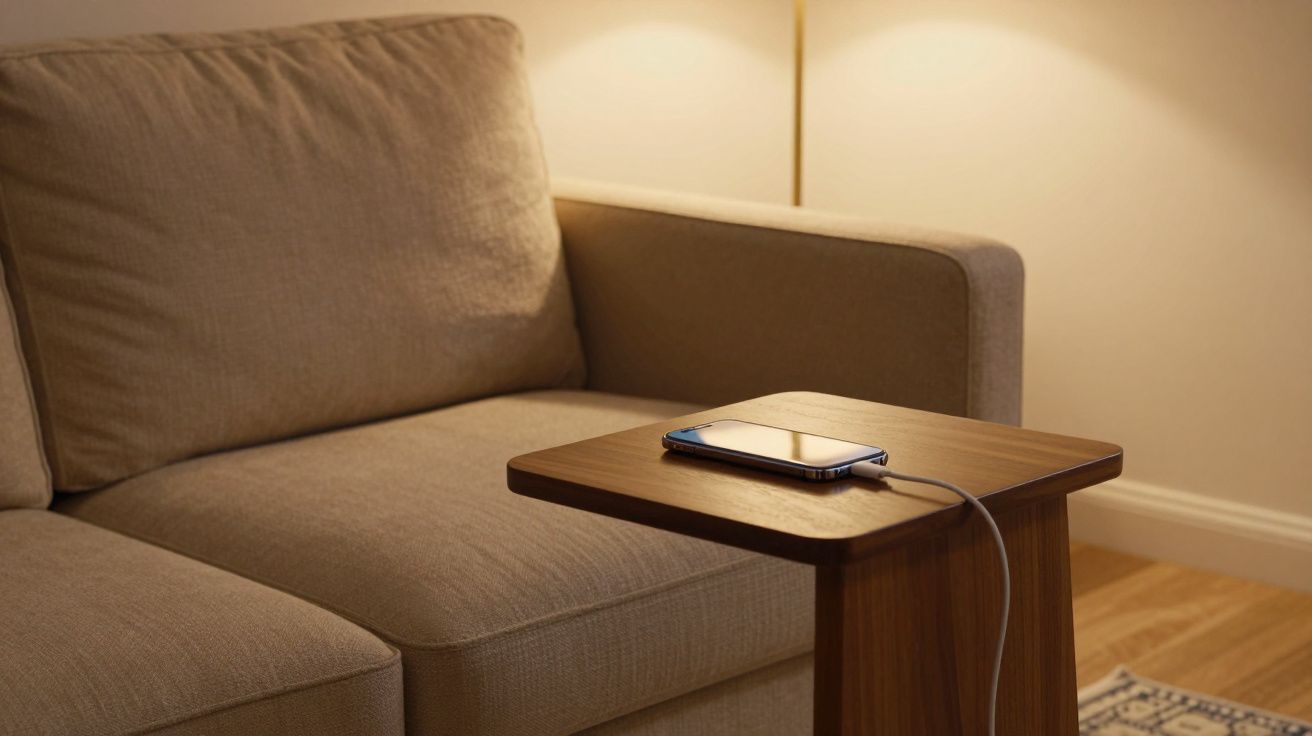
Use a hard, flat, non‑flammable spot: a wooden or metal table, a worktop, a dedicated charging shelf. Keep it clear of papers, curtains and blankets.Use proper kit
Stick to chargers and cables from the phone manufacturer or reputable brands that meet UK and EU safety standards. Look for UKCA/CE marks and, ideally, BS‑rated plugs.Unplug before you sleep
Once your phone reaches a comfortable charge (80–100%), disconnect the charger from both the device and the wall. A simple reminder alarm in the evening can help.Keep bedrooms boring for batteries
Avoid charging on the bed, under the pillow, or on the sofa you doze off on. If you must have the phone by the bed, charge it earlier and bring it unplugged.Give it breathing space
Do not cover your device with clothes, cushions or books while it is on charge. Let air circulate around it.
These steps sound small, but collectively they cut the most common pathways from “everyday charging” to “night‑time living room fire”.
Red flags in your current set‑up
Fire investigators tend to reach for the same phrases when they see certain tell‑tale signs. If any of these feel familiar, it is time to change course:
- A cable held together with tape or twisted at the plug end.
- A charger that feels hot to the touch, hums or buzzes, or smells faintly of burning plastic.
- More than one multi‑way adapter daisy‑chained behind the sofa or TV stand.
- Phone or tablet regularly buried in cushions or under a blanket while charging.
- Devices left charging on top of piles of laundry, paperwork or cardboard boxes.
They are not quirks; they are near‑misses waiting for an opportunity.
How to “read” your charger like an investigator
Most people glance at the front of a plug, see a logo and assume safety. Investigators look for different clues.
Start with these quick checks:
- Markings: Genuine chargers show clear voltage, current and safety marks (UKCA/CE, BS numbers). Blurry print or spelling errors are red flags.
- Weight and build: Very light, flimsy plugs often cut corners on insulation. A quality charger feels solid and the pins sit straight.
- Heat: Warm is normal under load; too hot to hold is not. Cheap units run closer to their limits.
- Match: Using a high‑power “fast charger” not designed for your phone increases stress on the battery and circuitry.
When in doubt, replace the suspect unit rather than nursing it along. The replacement will cost less than a single call‑out.
Habits to swap, at a glance
| Risk habit | Why it’s dangerous | Safer swap |
|---|---|---|
| Charging on sofa or bed overnight | Traps heat in flammable foam; nobody awake to notice trouble | Charge on a hard surface in another room, earlier in the evening |
| Using damaged or very cheap chargers | Higher risk of sparks, overheating and failure | Use branded or certified chargers and intact cables only |
| Overloading multi‑plugs behind furniture | Extra heat, poor ventilation, hard for you to see problems | Use one quality extension lead, fully uncoiled, within its rated load |
| Sleeping with phone under pillow | Zero ventilation, heat build‑up next to hair and bedding | Keep phone on bedside table, unplugged while you sleep |
What fire investigators actually want you to remember
Underneath the technical talk, their message is disarmingly human: assume that anything which keeps you warm and cosy should not also be tasked with handling electrical faults while you are unconscious. Sofas, duvets and mattresses are for you, not your chargers.
A phone on 40% battery will still wake you for the alarm. A text can wait until morning. A favourite armchair will not survive a smouldering cable tucked into its side pocket, and neither will the memories hanging on the walls above it. Changing where and when you plug in is one of the simplest ways to keep both.
FAQ:
- Is it really that dangerous to charge on the sofa if I stay awake? Staying in the room and checking the phone occasionally lowers the risk, but the sofa is still a poor choice because it traps heat and hides damage. It is far safer to use a hard, clear surface, even in the daytime.
- What about charging my phone in bed “just for a bit”? Beds behave much like sofas: soft, insulated and flammable. Even short naps with a phone under the pillow or on the duvet have ended in burn injuries. Keep chargers and devices off the bed entirely.
- Do modern phones not stop charging automatically when they’re full? Most do, but the charger and cable are still energised and can overheat or fail. Automatic cut‑off protects the battery’s lifespan, not the sofa underneath it. Unplugging removes that risk.
- Are wireless chargers safer than wired ones on a sofa? They remove the cable, but not the heat. Wireless charging creates warmth in both the pad and the phone, which is the last thing you want pressed into foam or fabric. Treat them with the same caution.
- What one change makes the biggest difference? Moving all overnight charging to a hard, clutter‑free surface away from beds and sofas – and unplugging before you sleep – tackles the majority of phone‑related fire risks in one habit shift.




Comments
No comments yet. Be the first to comment!
Leave a Comment