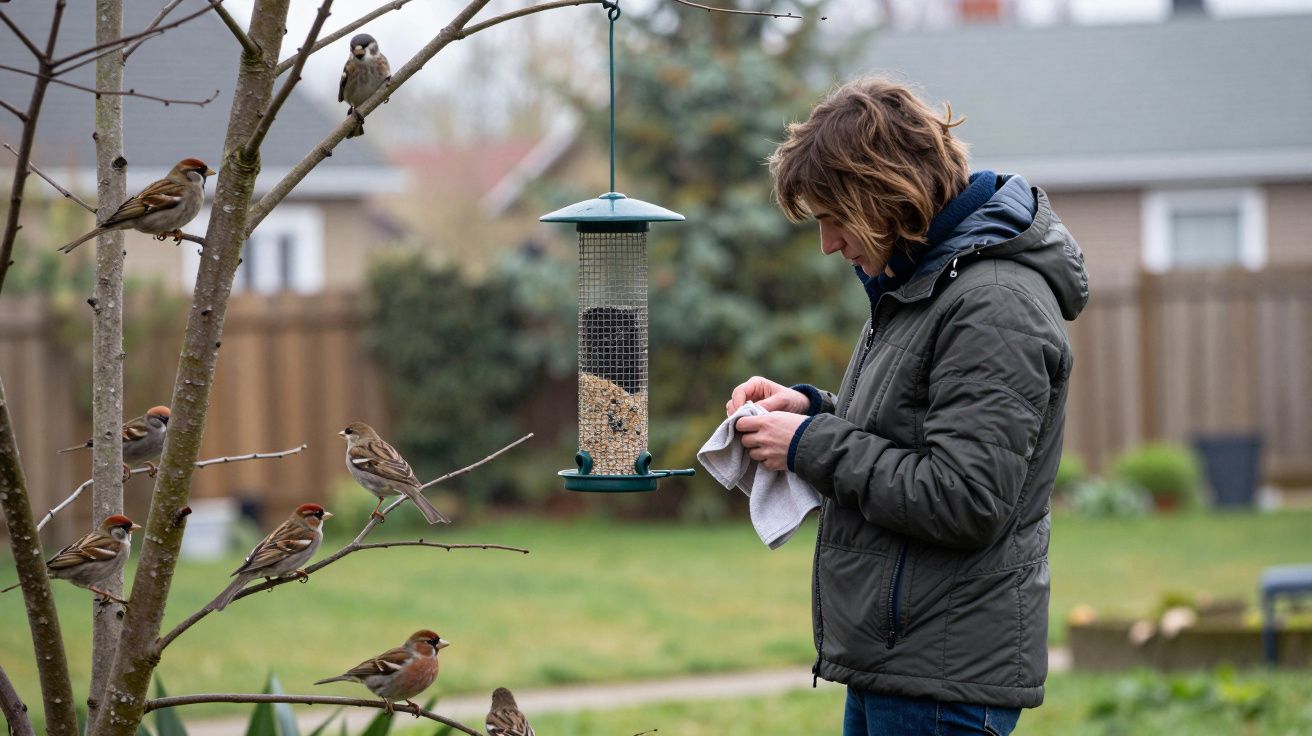
The first cold mornings make the feeders sound different. Seed hits plastic with a hollow clatter, fat balls thud in the mesh, and the garden goes briefly still, as if everything with wings is watching you measure. You tip the bag, hesitate, and feel the small temptation to brim the tube “to save doing it again later”.
At the reserve hide, nobody does that. The serious birders with notebooks and flasks stand behind half‑filled hoppers, not heaped ones. They top up little and often, note what vanishes first, and wipe the perches with a practised flick. Ask why, and you don’t just get bird behaviour. You get vets, parasites and a quiet rule: fresh food, clean kit, minimal crowding.
It turns out the line between “helping wildlife” and “building a disease factory” is thinner than most packaging lets on.
What experienced birdwatchers know that seed bags don’t say
Feeders don’t behave like hedgerows or fields. They compress dozens of beaks and droppings into a few centimetres of plastic, day after day. That intensity is brilliant for your garden list and terrible for infection control.
When you fill a tube or tray to the brim, two things happen:
- The food at the bottom sits there longest, where condensation and fine dust collect.
- You encourage more birds to stay for longer in a tight, beak‑to‑beak cluster.
Both quietly raise the odds of disease spreading. Birds don’t need a mountain of food waiting for them; they need food that’s fresh enough not to harm them.
Watch an experienced birder at home and you’ll notice a pattern. They:
- Put out only what’s likely to be eaten in a day or two.
- Adjust the amount with the weather and the season.
- Shake or discard any clumped, damp or discoloured food rather than burying it under a new layer.
“A constantly brimmed feeder is a red flag for us,” says one wildlife vet. “We see far more problems in gardens where food sits and stews than in those where it runs out for a few hours.”
That half‑empty look isn’t stinginess. It’s hygiene.
Where disease really starts: not in birds, but on the feeder
Garden birds already carry a background level of bacteria and parasites. The trouble begins when those microbes find somewhere warm, damp and crowded to multiply. A neglected feeder is almost purpose‑built.
Droppings on perches, saliva on ports, bits of regurgitated seed on the tray edge – add a run of wet days and mild temperatures and you have a thin biofilm you can’t easily see. Every bird that lands there picks up a little more on its feet, beak and feathers, then carries it to the next perch or puddle.
The main risks vets and wildlife health labs flag in UK gardens are:
- Trichomonosis – a protozoan infection that has hit finches hard, causing swollen throats, difficulty swallowing and rapid weight loss.
- Salmonella and other gut bacteria – spread via droppings onto food and surfaces, dangerous to birds and occasionally to people handling dirty feeders.
- Avian pox and respiratory infections – often worsened by crowding and poor condition, with scabby lesions or laboured breathing.
None of these arrive “because of” feeders. But once present, feeders can turn a few sick birds into a visible outbreak if food and surfaces are not managed.
Moist, compacted seed at the base of a very full tube is a particular problem. It goes stale first, can harbour moulds that irritate or poison, and is exactly where smaller birds spend the longest time feeding.
Your quiet hygiene routine: less feed, more often
You don’t need lab goggles and a disinfection schedule on the fridge. The habits that keep disease risk low are simple, and they line up neatly with that “never to the top” rule.
Aim for:
- Enough food for roughly one day in summer, one to two days in winter.
- Regular top‑ups rather than weekend mountains.
- A proper clean at least once a week, more during warm, wet spells or if you notice sick birds.
A basic cleaning routine looks like this:
- Take feeders down and empty old food into a bin (not on the ground).
- Scrub with hot, soapy water – inside tubes, around ports, on perches and trays.
- Disinfect with a weak bleach solution (around 10% household bleach in water) or a pet‑safe disinfectant, following the label.
- Rinse thoroughly and let everything dry completely before refilling.
On the ground, rake or sweep up fallen food and droppings. Rotate feeder positions so you’re not building up a contaminated patch of soil under the same spot all winter.
Let’s be honest: nobody does a perfect deep clean every single week. But if you tie it to something you already notice – the seed getting low, a spell of wet weather, or the weekend – it quickly becomes a small, repeatable ritual.
“It’s not about sterility,” a garden bird expert told me. “It’s about not letting muck and moisture sit long enough to become a problem.”
Crowding, stress and why “busy” isn’t always good
We like to see our gardens heaving with life. A full feeder that’s constantly covered in birds feels like success. For the birds, it can be something else: stress, conflict and a lot of very close contact they wouldn’t choose in the wild.
High bird density at a single food point means:
- More beak‑to‑beak contact.
- More droppings on perches and trays.
- Weaker, younger or shyer birds forced to wait around, exhausted and cold, for a gap.
Underfilling changes that pattern. Food still draws visitors, but it encourages movement – birds take a few seeds and move on, rather than settling in for long sessions. If you can, spread food across a couple of smaller feeders or mix hanging feeders with a ground tray to thin the crowd.
You’ll often see more natural behaviour this way too: different species using different levels, short visits rather than brawls at a single port, less frantic queuing. Health and interest go hand in hand.
How much, what kind, and when to stop
A little planning saves a lot of scrubbing. The mix you offer, and how you judge quantities, matters as much as the height of the seed column.
- Start small, watch, then adjust. Put out what you think is right for a day, then check how much is left at dusk and again the next morning. Trim up or down until most of it disappears in that window.
- Favour mixes that stay loose. Good quality seed and suet pellets clump less than cheap, dusty mixes. Avoid letting whole peanuts and large chunks sit in damp tubes.
- Protect from rain. Use weather guards or covered trays so you’re not pouring fresh seed onto a soggy base.
- Pause feeding if you see repeated signs of illness – birds fluffed up, drooling, hanging around with eyes closed, or food left untouched. Take feeders down, deep‑clean, and leave them off for a couple of weeks to break transmission.
Here’s a compact way to think about the trade‑offs:
| Risk point | What makes it worse | What serious birders do |
|---|---|---|
| Stale, mouldy food | Overfilled tubes, no break in feeding | Only 1–2 days’ worth, let it run out briefly |
| Dirty surfaces | Rare cleaning, fixed feeder spots | Weekly scrub, rotate locations |
| Over‑crowding | One huge, always‑full feeder | Several smaller feeders, half‑filled |
The surprising thing, once you try it, is that you rarely end up using less food overall. You simply waste less, clean less muck, and watch healthier birds.
The small satisfaction of doing it the quiet way
There’s a particular pleasure in realising you can improve things for wildlife without buying anything new. No special “antibacterial” feeders, no gimmick coatings. Just a shift in how high you pour and how often you wipe.
You start to notice patterns: which species show up as the feeder empties, which seeds they actually finish, where they prefer to perch when they’re not forced into a scrum. The garden feels more like a place you share and less like a vending machine.
“Good feeding isn’t about constant abundance,” as one long‑time ringer put it. “It’s about reliable, clean food that doesn’t make life harder for the birds we care about.”
Half‑filled feeders, short queues, and a cloth by the back door. That’s the unshowy set‑up behind many of the healthiest, busiest bird gardens you’ll ever sit and watch.
FAQ:
- How can I tell if birds are getting ill from my feeder? Watch for individuals that are fluffed up, slow to move away, drooling, struggling to swallow, or staying on the feeder for long periods with little feeding. A sudden drop in visits can also be a sign. If you’re worried, take feeders down, clean thoroughly, and contact a local wildlife charity or vet for advice.
- Is it cruel to let feeders run empty for a few hours? No. Wild birds are adapted to search multiple food sources. Brief gaps reduce crowding and help prevent food going stale. The risk comes from constantly available, dirty food, not from short pauses.
- Can dirty feeders make people sick as well as birds? Yes, in rare cases. Salmonella and other bacteria from droppings can transfer to human hands. Always wash your hands after handling feeders, and keep children from playing directly under feeding areas.
- Do I need to stop feeding altogether if there’s an outbreak in my area? If conservation organisations or vets issue specific advice, follow it. Otherwise, the key steps are to clean more often, reduce crowding by spacing feeders, and never overfill. In severe local outbreaks, a temporary pause gives diseases less opportunity to spread.



Comments
No comments yet. Be the first to comment!
Leave a Comment