The first thing you notice isn’t the look, it’s the smell. Sharp, resinous, just on the edge of smoky, it cuts through the sweetness of candles and baking and tells you, quietly but firmly, that winter has arrived.
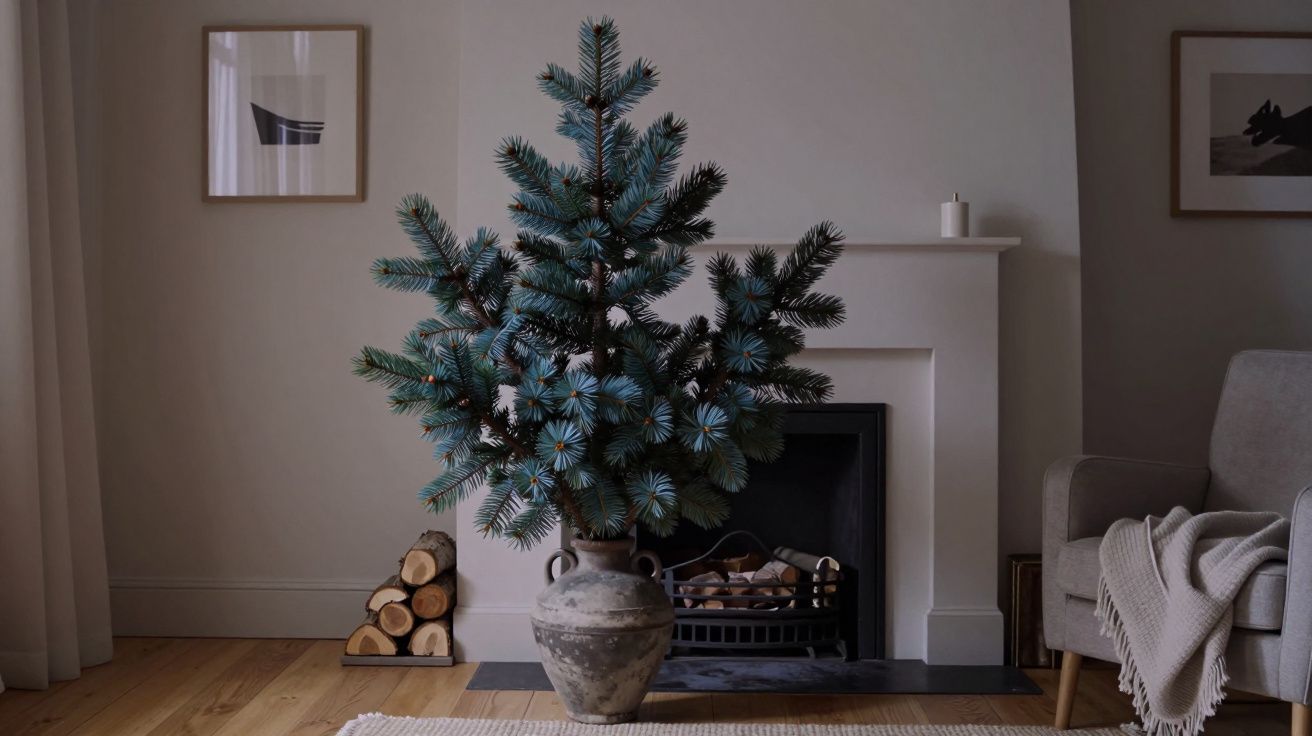
On a kitchen table in Leeds, a stylist lays out bundles of long, inky-green needles and knobbly, russet-brown twigs. No glossy supermarket wreath base, no imported fir. Just armfuls of Scots pine from a Yorkshire estate, still cool from the air outside. In a London flat, a single branch stands in a heavy jug by the fireplace, reaching almost to the ceiling like a minimal, Nordic sketch of a Christmas tree.
For decorators, florists and anyone who’s tired of trees that shed before the Boxing Day leftovers are gone, Scots pine has become the quiet upgrade. It looks wilder, lasts longer, and costs less than a full tree. There’s only one catch: treat it like a cut flower, not a piece of scenery, or you’ll still be hoovering needles by New Year.
Why Scots pine is suddenly everywhere
Part of the shift is aesthetic. Scots pine has a different presence from the classic spruce triangle we grew up with. The needles are longer and softer, carried in pairs on elegantly spaced twigs that feel drawn rather than stuffed. It works in grand stair garlands, but also as a single, sculptural stem in a stoneware jug.
Then there’s the colour. Mature Scots pine leans towards a deep blue-green that reads sophisticated rather than saccharine under warm bulbs and candlelight. Photographers love it because it holds texture and tone in low winter light. Stylists love it because it looks wild without looking messy.
The other reason decorators are defecting is pragmatic: longevity. Properly conditioned, Scots pine holds its needles noticeably longer than traditional Norway spruce. The needles are thicker, the cut wood is more forgiving, and the branches cope better in chilly halls, porches and draughty sitting rooms.
It also fits a more local, low-footprint mood. Scots pine is native across much of the UK, widely grown in forests and estates, and easy to source as thinnings or prunings rather than as plantation trees destined for one month’s glory. You can have a house full of green without committing to a huge tree in every room.
How to recognise good Scots pine – and avoid the crispy stuff
If you’re buying from a florist, market or tree farm, it pays to get fussy for 90 seconds. Those minutes decide whether you enjoy your greenery or sweep it up.
Look for these signs:
- Colour and sheen: Needles should be a rich, even green (often with a blue-ish cast) and slightly glossy, not dull or greyed.
- Flex test: Bend a smaller twig gently. It should arc, not snap. If it cracks easily, it’s already on the way out.
- Shake test: Give the bundle a firm shake. A light dusting of needles is normal; a small pile on the floor is a red flag.
- Cut ends: Freshly cut wood looks pale and slightly moist. Very dark, dry ends suggest it was cut weeks ago.
- Scent: Crush a needle between your fingers. You should get a clear, resinous smell. If there’s almost no scent, the branches are tired.
True Scots pine needles grow in pairs from each little tuft on the stem. If the needles are very short and densely packed all around the twig, you may have spruce or a different fir, which behaves differently once cut.
Buying vs cutting your own
If you’re lucky enough to have access to land with Scots pine (and permission to cut), take only side branches and leave the main structure of the tree intact. Use clean, sharp loppers and cut with a slight angle so water can move up the stem more easily.
Whether you cut it yourself or buy it, treat Scots pine as perishable from the moment it’s cut. The timer starts the instant sap seals over the wound.
Conditioning: the bit most people skip (and regret)
What you do in the first few hours after bringing branches home largely decides how much they’ll shed later. This is where decorators and florists quietly earn their money.
Unwrap immediately
Don’t leave bundles tied in plastic or netting. Heat builds, moisture sweats, and needles start to dry from the inside. Loosen everything and let air circulate.Re-cut the ends
Use sharp secateurs or a fine saw to slice 2–5 cm off the base of each stem at an angle. This opens fresh vessels so the branch can drink again. Crushing or “smashing” the ends with a hammer does more harm than good.Strip lower needles
Remove any needles that would sit below the waterline in a bucket or urn. Rotting foliage in water encourages bacteria, which block uptake and speed up needle drop.Give them a long drink
Stand the branches in deep, cool water – ideally in a garage, shed or unheated room – for at least 6–12 hours, overnight if you can. Think of it as rehydrating after a long journey.Keep them cool until you decorate
The closer you can get to outdoor temperatures without freezing, the better. Avoid parking them next to a boiler or in a sunlit conservatory “just for now”.
Hydration is your single most powerful tool against needle drop.
Keeping needles on: room-by-room tactics
Once your Scots pine is conditioned, where and how you use it matters as much as how fresh it was.
Garlands on banisters and mantels
Garlands look spectacular, but they’re also the most vulnerable: a lot of surface area, very little access to water.
- Soak before you construct. Fully hydrate loose branches and any moss or foam you’re using.
- Wire in stages. Build the garland where it will live so you’re not lugging a finished, thirsty piece from room to room.
- Avoid direct radiator heat. If the banister runs alongside a blazing radiator, turn it down a notch or slide the garland a little higher so hot air isn’t blasting it.
- Light choice matters. LED fairy lights run cooler than older bulbs and won’t bake the needles.
Expect a well-made Scots pine garland in a reasonably cool hallway to look good for two to three weeks; in a hot sitting room over a fire, you might get 10 days at its best.
Wreaths on doors and windows
Outdoor, sheltered wreaths are where Scots pine really shines. Cold, damp air is its friend.
- Choose a mossed ring or wire frame that allows you to wire in stems without crushing them.
- Mist occasionally with a clean spray bottle during dry spells, especially on south-facing doors.
- Indoors vs outdoors: An interior wreath over a mantle will dry far faster than one on a front door. If you want one indoors, keep it away from the stove and consider using a mix of pine and more moisture-loving foliage like eucalyptus that you can swap out mid-season.
Branches in vases and jugs
Treat these exactly like very woody, very robust flowers.
- Use a heavy container – pine branches are top-heavy and will tip light vases easily.
- Change water every few days. Top up as needed and rinse the container to keep bacteria down.
- Re-cut stems weekly if you’re keeping the same branches on display for more than 10–14 days.
- Keep away from direct sun coming through glass, which can heat water surprisingly fast.
A tall vase of Scots pine in a cool corner will often outlast your main tree.
Quick reference: where Scots pine lasts longest
| Display type | Best location | Typical lifespan (with care) |
|---|---|---|
| Door wreath (outdoor) | Sheltered, cool exterior | 3–4 weeks |
| Stair garland (indoor) | Cool hallway, no direct heat | 2–3 weeks |
| Vase arrangement | Cool room, fresh water | 2–4 weeks |
These are guides, not guarantees. A hot, dry new-build with underfloor heating will age any greenery faster than a draughty Victorian hall.
Mistakes decorators quietly learn not to make
Even professionals get caught out when the season turns mild or the heating schedule changes. A few recurring culprits are worth dodging from the start.
Placing greenery above radiators and log burners
Warm air rises directly through the branches, desiccating needles in days.Building arrangements too early
It’s tempting to make everything on the first weekend of December. For key pieces in warm rooms, aim for one to two weeks before Christmas instead.Ignoring humidity
Very dry indoor air accelerates needle shed. A simple bowl of water near a radiator, or a proper humidifier, buys you time.Overloading with heavy ornaments
Scots pine branches are strong but flexible. Too many baubles drag them down, stressing the stem and exposing more needles to incidental knocks.Using old, dusty stock
Bargain bundles that have sat outside a DIY shed for weeks may never perk up, no matter how kindly you treat them.
If you’re unsure, do a small test: bring one branch home a fortnight before you plan the main décor and see how it behaves in your actual conditions.
A simple care checklist for needle‑tight Scots pine
- Re-cut stems and hydrate deeply before you decorate.
- Keep branches as cool as your space allows, away from direct heat.
- Use LEDs, not hot bulbs, in garlands and wreaths.
- Mist outdoor wreaths and indoor displays in very dry air.
- Change vase water, and re-cut stems weekly for long arrangements.
- Accept that some needle fall is normal; you’re aiming for a gentle sprinkle, not a green carpet.
FAQ:
- Does Scots pine always drop fewer needles than other Christmas greenery? Generally, yes: compared with traditional Norway spruce it holds its needles better, especially if conditioned well and kept cool. Compared with non‑drop firs like Nordmann, it can be similar or slightly more prone to shedding in very warm rooms, but tends to look fresher for longer in cooler spaces.
- How long before Christmas should I put Scots pine decorations up? In cool hallways and on outside doors, two to four weeks is fine. For garlands or arrangements in warm living rooms, aim for 10–14 days before Christmas to keep them looking their best through New Year.
- Can I mix Scots pine with other foliage? Yes, and it often improves longevity and texture. Eucalyptus, holly, ivy and bare birch twigs all pair well, and you can swap out shorter‑lived stems mid‑season while the pine carries the structure.
- Is Scots pine safe around pets and children? It isn’t considered highly toxic, but needles can irritate if chewed and may cause minor stomach upset if swallowed in quantity. The bigger risk is physical – sharp needles and fallen twigs under bare feet – so sweep regularly and keep heavy arrangements out of reach.
- What can I do with the branches after Christmas? Let them dry fully, then add them to garden waste, a home compost heap (in small pieces) or use them as a temporary mulch around acid‑loving plants. Avoid burning resinous wood in poorly ventilated indoor stoves, and don’t leave large piles of needles on lawns, where they can smother grass.





Comments
No comments yet. Be the first to comment!
Leave a Comment