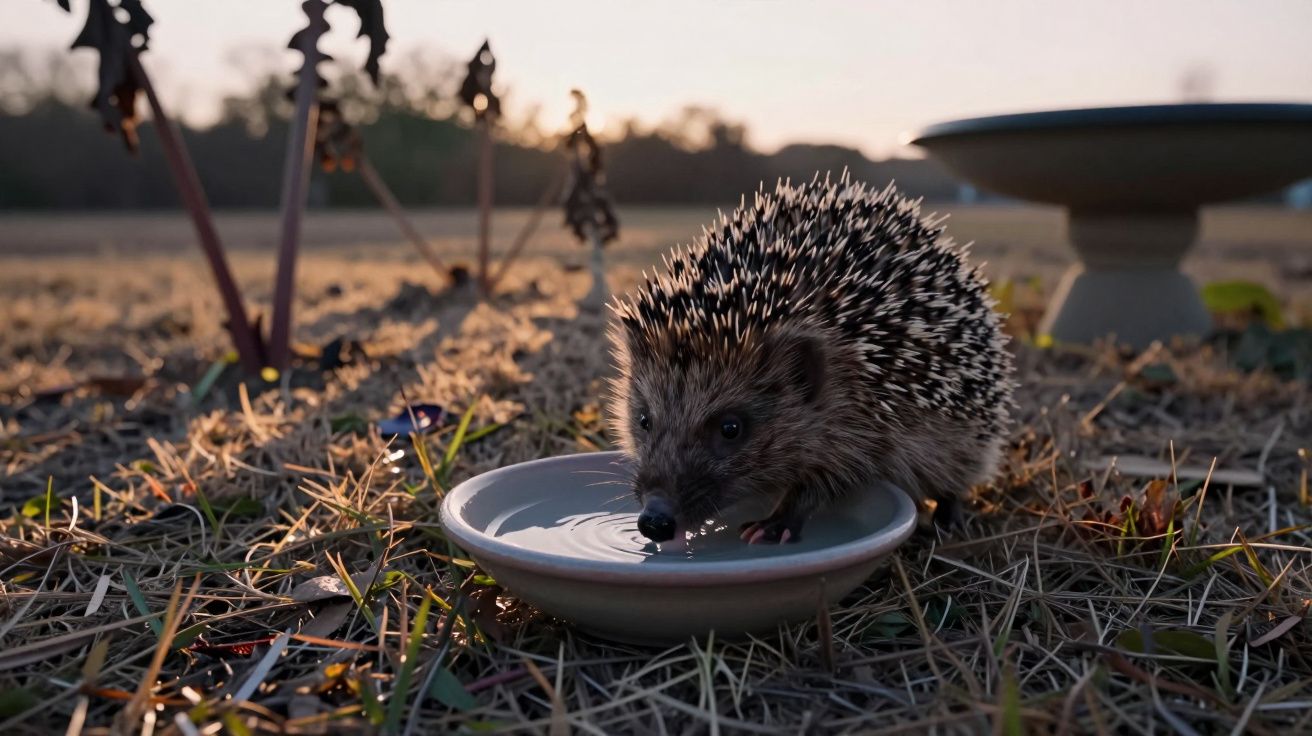
Just after sunset, when the garden finally cools and you’re thinking about closing the back door, that’s when you might hear it: a faint scrabble in the dry grass, a soft, surprisingly loud snuffle. You glance out, expecting next door’s cat, and instead there’s a hedgehog – smaller than you thought they were in real life, moving like a wind‑up toy that’s running out of charge.
It pads across the yellowed lawn, nose sweeping, working a slow zig-zag pattern towards the patio. It pauses at an empty plant saucer, licks around the cracked rim, then moves on. Every so often it just stops and sinks slightly at the shoulders, as if the effort of holding its own weight up is suddenly a bit too much.
From the kitchen window you can see the bones of your garden in heatwave mode: hanging baskets half-dead, pond shrunk to a muddy ring, birdbath long since gone dusty because you forgot to top it up. If you watch that hedgehog for more than a minute, it hits you with a small, sharp thud of guilt: it’s not just your plants that are thirsty.
What most people don’t realise is that in weeks like this, the difference between a hedgehog surviving the summer and quietly dying under a hedge can be as simple as a low bowl of water on the lawn. A cheap, boring, washing‑up‑bowl sort of fix – provided you don’t make the same two mistakes rescuers keep seeing.
The quiet crisis happening at hedgehog height
Heatwaves don’t look dramatic from a hedgehog’s eye-line. There’s no weather warning graphic, just ground that’s suddenly baked hard, slugs hiding deep, and all the normal drinking spots fading away. Puddles vanish. Shallow bits of ponds recede and steepen. The water that drips from hosepipes and flowerpots when people water their gardens simply… stops.
Hedgehogs lose water faster than you might think. Ticks and fleas take their share. Nursing mothers are producing milk in roasting conditions. Youngsters are exploring for the first time in dry, unfamiliar territory. Dehydration creeps up quietly: gums go tacky, eyes sink, the animal slows and wobbles.
Wildlife rescues across the UK now brace themselves every hot spell for a wave of “collapsed in the garden” hedgehogs. Again and again, the intake notes say the same thing in different handwriting: “Found out in the day, very thin, very thirsty.” Often, there’s a line that stings: “We thought wildlife just sorted itself out.”
In a cooler, wetter Britain with thicker hedgerows and more messy corners, it largely did. But modern gardens are neater, drier, more fenced-in. Our hedgehog population has crashed in just a few decades. In that new landscape, a creature that for millions of years has relied on dew, ditches and dripping vegetation now frequently finds… decking, gravel, and nothing to drink.
Why one shallow bowl matters more than you think
From human height, a bowl of water on the lawn looks almost laughably small as an answer to climate news. But scale it down to hedgehog size and it becomes a lake on your doorstep.
Hedgehogs can’t reach is the first issue. Birdbaths are too high. A tall bucket full of water might as well be empty. Even many wildlife ponds are no help in a heatwave, because the shallow, shelved bits dry first, leaving steep, slippery margins a small animal can’t navigate safely.
A wide, low bowl on flat ground, kept topped up, is perfectly engineered for a hedgehog’s short legs and short neck. They can approach from any angle, put their front feet on the rim for stability, and drink without contortions. It also does double duty for songbirds, foxes, bats, insects and any other nocturnal visitor trying to get through a hot, dry night.
Rescuers will tell you, often with a tired half-smile, that they’ve watched hedgehogs drink solidly for minutes when offered water on admission – not greedy gulping, but the slow, desperate refuelling of an animal that hasn’t found a drink in too long. For some of those hedgehogs, a single reliable water source on their nightly route would have meant they never ended up in a cardboard box at all.
The good news is that setting up that lifeline is easy. The bad news is that people keep doing two things “for the hedgehogs” that actually land them on the vet table.
Mistake one: the deadly “helpful” bowl
The first mistake looks kind on the surface: putting out more water in a larger container “so they don’t run out”. A trug, a deep dog bowl, a bucket, even an old paddling pool. Plenty to drink, surely. And it doubles as a wildlife pond, right?
What rescuers see, though, is the other side of that decision. Hedgehogs, frogs, fledgling birds and even bats that have fallen into steep‑sided containers and simply can’t get back out. Smooth plastic, no footholds, no slope. In a heatwave, that’s not just a drowning risk – it’s also a slow, grim death from exhaustion and exposure.
Hedgehogs are surprisingly good swimmers. What they can’t do is cling to vertical walls forever. They paddle, panic, tire, and quietly disappear under the surface. In rehab centres, staff are now so used to the story that they flinch slightly when they hear the phrase “we left a big tub of water out for wildlife…”
The fix is to think wide and shallow, not deep and generous:
- Choose a low dish where the water comes no higher than halfway up a hedgehog’s leg.
- Heavy ceramic plant saucers, roasting tins, old Pyrex dishes or sturdy washing-up bowls all work well.
- Place it on level ground where the rim sits just above the soil or grass, so a small animal doesn’t have to climb a slippery cliff to get a drink.
- Drop a brick, large stone, or a wedge of broken paving into any deeper container you do use, creating a permanent, solid ramp out.
If you already have a pond or water butt, give them escape routes too: a log sloping into the water, some stacked stones, a purpose-made “hedgehog ramp”. Rescuers see so many preventable drownings in hot weather that they’ll happily repeat this part until they’re hoarse.
Mistake two: milk, bread, and other well-meant harm
The second mistake is pure childhood storybook: a saucer of milk on the doorstep “for the hedgehogs”. It feels kind. It looks sweet. It is, unfortunately, a fast track to a very sick animal.
Hedgehogs are lactose intolerant. Their digestive systems are not set up for cow’s milk, especially not in the quantities people pour out on hot nights. The result is diarrhoea, which strips water and vital salts from the body at exactly the moment they can least afford to lose them. Rescues regularly admit dehydrated, underweight hedgehogs whose finders are baffled: “But we’ve been giving him milk every evening.”
Bread is no better: it’s low in the nutrients they need and just sits in the gut, filling them up without actually helping. In a heatwave, what a hedgehog needs from you is hydration first, then proper calories if you’re able to offer them.
The simple rule rescuers wish could be printed on every garden gate is this:
- Water only for thirst. Fresh, clean, always available, in a shallow dish.
- If you want to offer food, stick to:
- Meaty, jelly-based cat or dog food (not fish flavours if you can avoid them).
- Specialist hedgehog biscuits from reputable brands.
- Avoid:
- Milk of any kind.
- Bread or cake.
- Mealworms, peanuts and sunflower hearts as a main diet – they’re like junk food and can cause bone problems if overfed.
In other words, be the corner shop that stocks sensible basics, not the all-you-can-eat dessert buffet.
How to set up a hedgehog-safe water station in five minutes
You don’t need a wildlife gardening diploma. You need a bowl, a tap, and the willingness to remember it exists once the novelty wears off.
Pick your dish.
A wide, low, heavy-ish container is ideal. Terracotta plant saucers and ceramic pie dishes are favourites because they don’t tip easily and warm up slowly in the sun.Choose the right spot.
Somewhere shaded or semi-shaded so the water stays cooler for longer. On grass or earth rather than hot paving if possible. Tuck it near a hedge, fence gap or “hedgehog highway” where you already see droppings or hedgehog-sized tunnels under the fence.Add an escape step.
Even in shallow dishes, pop in a flat stone or a few large pebbles to create varied depths. Smaller creatures like bees and beetles can then drink without falling in and floundering.Fill, don’t overfill.
Aim for a couple of centimetres deep in very shallow dishes, more in larger ones, but always with a clear, gentle slope from edge to centre. You’re not filling a moat; you’re setting a table.Make topping up a habit.
Link it to something you already do: letting the dog out, taking the bins, hanging washing. Empty and refill once a day so it doesn’t turn into a mosquito nursery or an algae swamp.Keep it low-key.
No need for lights, cameras or rearranging the whole garden. The best wildlife interventions are the ones you can keep going without thinking too hard about them.
If you’re the sort of person who likes a quick reference, think of it as:
| Do | Don’t |
|---|---|
| Use shallow, stable dishes on the ground | Use deep buckets, troughs or smooth-sided tubs with no ramp |
| Offer fresh water every day | Leave out milk or bread “as a treat” |
| Place bowls in shade near cover | Put them in the open sun where they heat and evaporate fast |
When a thirsty hedgehog needs more than a drink
Water stations are brilliant for healthy animals doing their nightly rounds. Sometimes, though, the hedgehog in your garden needs actual rescue rather than just a top-up.
In a heatwave, any hedgehog out in full daylight is waving a red flag. A quick shuffle at dusk or dawn is normal; a small, wobbly creature sunbathing on the lawn at 2 p.m. is not. Other warning signs rescuers mention again and again:
- Staggering, circling, or seeming “drunk”
- Lying out, panting, and not try to scuttle away when you approach
- Covered in flies, or with small white “grains of rice” (fly eggs) on the fur
- Very thin, with a noticeable “waist” behind the head
If you see any of this, the kindest thing is not to simply push a bowl towards them and hope. Offer shallow water, yes – but also:
- Gently pick them up using gardening gloves or a towel and pop them in a high-sided cardboard box with ventilation holes.
- Put a small, very shallow dish of water in the box and a scrunched-up towel or fleece for hiding.
- Bring them indoors somewhere quiet, away from pets and children.
- Ring a local hedgehog rescue, wildlife hospital or the RSPCA/SSPCA/USPCA for advice and directions.
Rescuers would far rather talk you through a “false alarm” with a healthy hedgehog than miss a chance to save a dehydrated one because someone assumed nature would fix it by itself.
Listening at garden level
It’s easy to feel that helping wildlife requires a rewilding project, a grant, and three spare weekends. In reality, much of what struggling species need from us is smaller and closer to the ground: a gap under a fence, a pile of leaves left alone, a single patch of long grass that doesn’t meet the mower.
A low bowl of water on a scruffy bit of lawn sits squarely in that category. It won’t fix the climate crisis. It won’t reverse decades of habitat loss on its own. But to the hedgehog that finds it at midnight, when the rest of the neighbourhood has baked dry, it is the whole world for a minute or two.
Somewhere in your area, wildlife rescuers are lifting yet another tiny, prickly body out of a cardboard box, running a finger gently along its dry gums, and wishing, not for a miracle, but for a few more gardens with boring bowls of water in them.
You can’t control the heatwave. You can’t save every hedgehog. But you can step outside this evening, set down a shallow dish, and quietly change the ending of the story for at least one.
FAQ:
- Won’t a water bowl just attract rats or foxes?
Any ground-level water source may be used by a range of animals, including rats and foxes. In most gardens, they’re already passing through whether you see them or not. If you’re worried, keep food offerings modest and clear away leftovers; plain water on its own is rarely a problem.- How many bowls should I put out?
Even one makes a difference. If you have a larger garden, two or three in different spots (front and back, sun and shade) increase the chances a hedgehog will find at least one on its nightly route.- Can I add ice cubes in very hot weather?
A couple of ice cubes to keep the water cool are fine in a large dish, but avoid making the water freezing cold. Sudden temperature shocks aren’t ideal for small animals; cool and fresh is better than icy.- What about using rainwater from a butt or water feature?
Clean rainwater is great, but make sure it hasn’t gone stagnant or mosquito‑ridden. If in doubt, top bowls up from the tap and use rainwater for plants.- Is it still worth doing this outside of heatwaves?
Yes. Hedgehogs need water all year round, and a regular, trusted source helps them build safe routes through urban areas. In winter, remember to break any ice that forms so they can keep drinking.





Comments
No comments yet. Be the first to comment!
Leave a Comment