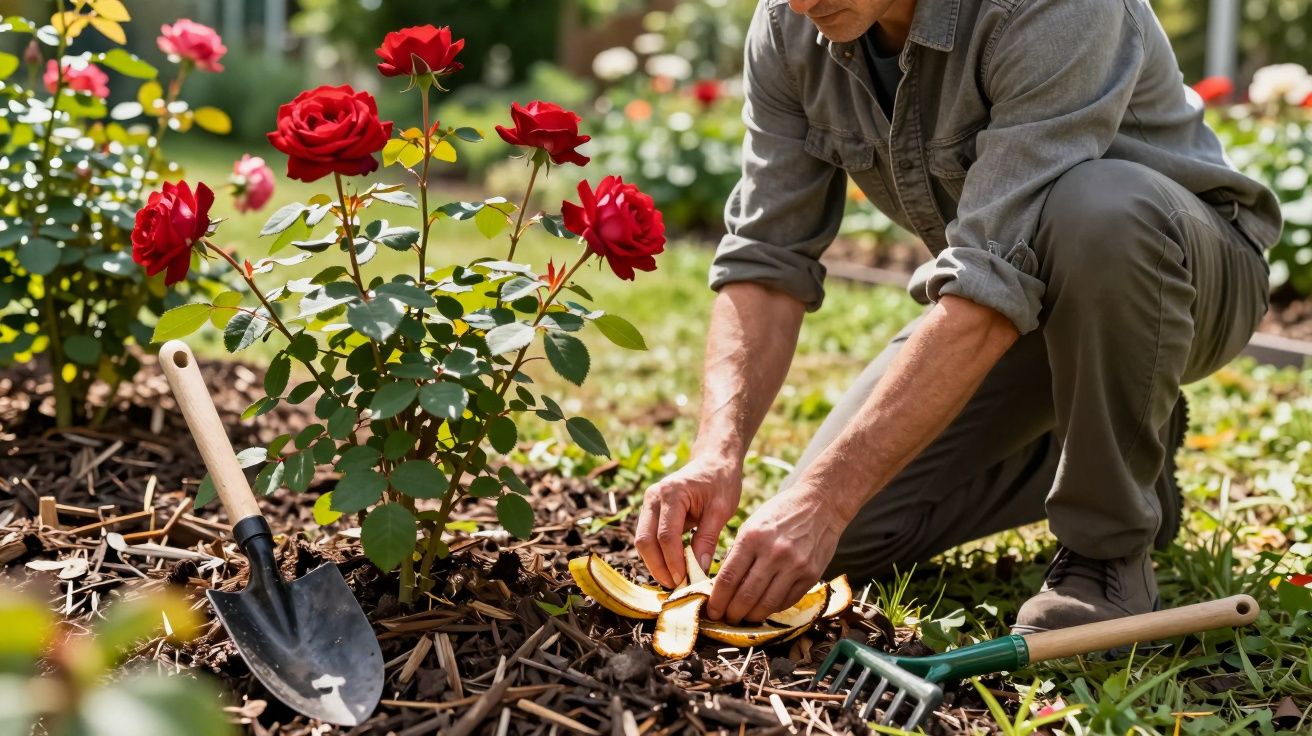
The first time I saw it, I thought the neighbour’s kids had been snacking in the borders.
Early spring light, a low sun catching the thorns, and there they were: curved yellow scraps half‑tucked under the mulch at the base of the roses. Not one, but several bushes, each with a little halo of banana skin poking out like abandoned sandwiches.
When I mentioned it over the fence, she laughed. “Oh, they’re for the roses. Potassium boost. TikTok says it’s brilliant.”
Two plots down, Brian, who has grown roses longer than I’ve been alive, rolled his eyes so hard you could almost hear it. “Nonsense,” he muttered. “If the slugs don’t thank her, the rats will.”
Between the eager recyclers and the unimpressed old hands, the humble banana skin has become oddly controversial. So what’s really going on under that mulch?
What banana skins are supposed to do for roses
The internet version is simple and seductive: bananas are rich in potassium, roses love potassium, therefore banana skins under roses must mean bigger blooms and stronger plants. Free fertiliser, no waste, job done.
There is a grain of truth.
Banana skins do contain:
- Potassium (linked with flower and fruit production)
- Phosphorus (roots, general growth)
- Small amounts of calcium, magnesium and trace elements
As they rot, those nutrients leak into the surrounding soil where roots and soil life can, in theory, make use of them. In a lab, you can measure potassium in banana peel ash at impressive levels.
But gardens are not labs, and you are not feeding roses with ash. You are feeding them with something that has to break down in real soil, at real temperatures, with real creatures all getting involved on the way.
Where the myth meets the soil
In practice, a banana skin under a rose is a slow, very modest feed, not a magic shot.
Here’s why:
- Fresh peel has to decompose before nutrients are available. That takes weeks or months depending on how warm, damp and biologically active your soil is.
- Most home gardens already have reasonable background levels of potassium if compost or manure is added regularly. Roses rarely fail for potassium alone.
- Roses are heavy feeders. They need nitrogen, phosphorus, potassium and trace elements in balance, plus decent organic matter. One banana skin per bush barely nudges that equation.
Composting science backs this up. Studies looking at kitchen waste show banana skins rot happily and add some nutrients, but as part of a much bigger mix. On their own, they are not a complete or balanced fertiliser.
That does not make the trick useless. It just knocks it off its pedestal.
Think of banana skins as:
A tiny, slow‑release top‑up and a way to keep organic matter out of the bin.
If they’re handled well, your soil life will thank you. If they’re not, other visitors might get there first.
The two camps: quiet converts and eye‑rolling traditionalists
Spend ten minutes on gardening forums and you’ll meet two very clear banana tribes.
The quiet converts often say things like:
- “I chop the skins and bury them deep under the mulch. The worms love it.”
- “I’ve always put them in the planting hole with new roses – nothing wasted.”
- “They disappear in a few weeks; I’ve never had an issue.”
They tend to:
- Use skins in moderation
- Bury them properly rather than leaving them on the surface
- Already have decent soil and a regular feeding routine
For them, banana skins are part of a wider habit of feeding the soil, not a replacement for proper rose food.
The eye‑rollers are not all anti‑banana; they are anti‑hype.
Common objections include:
- “You’ll attract slugs and snails – it’s basically a fruit buffet.”
- “Rats, foxes, even badgers will dig shallow skins up.”
- “It looks like litter until it breaks down.”
And they have a point. A half‑rotten peel lying on the soil is easy pickings for slugs, especially in a damp spring. Foxes and rodents will happily rummage for anything that smells remotely edible. If your main battle is already with slugs stripping new rose growth, you do not want to open a side buffet.
Underneath the banter sits a sensible question: can you use banana skins in a way that feeds the soil without feeding the pests?
If you want to try it, do it the way soil likes
You do not have to join a banana cult to experiment. You just need to respect how decomposition actually works.
A simple, low‑drama method:
Prioritise the compost bin.
If you have one, most banana skins should go there. Mixed with other greens and browns, they rot quickly into a crumbly, reliable feed you can spread everywhere – not just under roses.If using direct under roses, go deep.
- Cut skins into small pieces (2–3 cm). More edges = faster breakdown.
- Dig a narrow slit or small hole 10–15 cm away from the stem, at least 10–15 cm deep.
- Drop the pieces in, cover with soil, then replace the mulch. No yellow on show.
- Cut skins into small pieces (2–3 cm). More edges = faster breakdown.
Time it with the seasons.
Early to mid‑spring, once the soil has warmed slightly, is ideal. Microbes and worms are waking up and can actually do something with your offering.Keep it modest.
One or two skins per established rose every few weeks is plenty if you are also using proper feed. More than that is overkill and may just create slimy pockets in heavy clay.
Some quick do and don’t guardrails:
- Do use unsprayed or well‑washed skins if possible.
- Do slice or tear them; whole skins hang around longer.
Do cover completely with soil before mulching.
Don’t just lob whole skins on top of the mulch.
Don’t rely on them as your only rose fertiliser.
Don’t add them around very young, shallow‑rooted plants where any pest damage will be felt quickly.
Handled like this, they’re closer to quiet soil-building than to the “slug bait” critics worry about.
What roses actually need more than banana skins
Roses are straightforward if you give them the basics. Banana skins, if you use them, should sit on top of this, not instead of it.
A resilient rose routine usually looks like:
A proper spring feed.
Late March or April, apply a balanced rose fertiliser (organic or synthetic) at the recommended rate. This provides a reliable mix of nitrogen, phosphorus and potassium.Mulch, mulch, mulch.
A 5–7 cm layer of well‑rotted compost, composted bark or manure around (not touching) the stems helps:- Feed soil life
- Keep moisture in
- Suppress weeds
- Buffer temperature swings
Watering by the root, not the leaf.
In dry spells, a deep soak once a week is better than a daily sprinkle. Damp foliage encourages disease; damp soil encourages root health.Basic hygiene.
Clear fallen, diseased leaves, especially if black spot is an issue. Clean secateurs between plants. Airflow and cleanliness matter more than one extra banana skin.
Once these are in place, re‑using the odd peel under the mulch is fine. If they are not, no number of skins will rescue a hungry, water‑stressed rose in compacted soil.
Comparing the main ways gardeners use banana skins
| Method | Upside | Main risk / drawback |
|---|---|---|
| Tossed whole on soil surface | Easiest, zero tools | Looks messy; likely slug / rodent bait |
| Chopped and buried under mulch | Feeds soil life slowly; out of sight | Takes a bit of digging effort |
| Added to compost heap | Quickest, safest breakdown; feeds whole garden | Needs a functioning compost system |
| Soaked as “banana tea” feed | Feels thrifty; simple to make | Nutrient content is low and variable |
If you enjoy the ritual, pick the version that most suits your garden and your local wildlife situation. In a slug‑ridden, fox‑heavy city plot, the compost heap is usually the wisest choice.
So, is it genius, nonsense, or just kitchen waste with a PR team?
Once you strip away the online sparkle, banana skins under rose mulch are… ordinary.
They are not a miracle fertiliser. They are also not a gardening crime. They are just one more bit of organic matter your soil can process, slowly and quietly, if you give it half a chance.
Where the arguments flare is usually here:
- If you leave skins exposed, you are indeed offering slugs, snails and scavengers a snack.
- If you bury them properly or compost them first, they become part of the normal underground buffet that worms and microbes enjoy.
The real decision is not “banana skins: yes or no?” It is:
“Am I better off feeding these to my compost, or can my roses safely host a few under their mulch?”
For many gardeners, especially those already mulching and feeding well, the compost heap wins. For others, a small burial ritual beside a favourite shrub scratches the itch to waste less without attracting every slug in the postcode.
Either way, your roses will still care more about water, soil structure and a decent spring feed than about what you did with last night’s pudding.
FAQ:
- Do banana skins really make roses flower more?
Not in any dramatic, proven way on their own. They add a little potassium and organic matter as they decompose, but good soil, proper rose fertiliser and consistent watering have a far bigger impact on bloom quantity and quality.- Will banana skins under mulch attract slugs and snails?
Whole or shallow‑buried skins can. They are soft, moist food in exactly the layer where slugs roam. Chopping and burying them at least 10–15 cm deep, or composting them first, greatly reduces the risk.- Can banana skins bring in rats or foxes?
In urban and suburban gardens, any food‑like smell can tempt opportunists. If you have a known rat or fox problem, keep banana skins to a sealed compost bin or council food‑waste caddy rather than burying them near plants.- Is it better to use banana “tea” as a liquid feed?
Soaking skins in water makes a very weak, inconsistent fertiliser. It will not harm healthy plants when diluted, but it is far less reliable than a proper liquid feed and has little evidence behind it beyond anecdotes.- Should I buy organic bananas if I’m using the skins in the garden?
If you are concerned about pesticide residues, organic is a reasonable choice, but most residues on conventional bananas are low and mainly on the peel surface. Washing skins before use and composting them with other material further dilutes any traces.



Comments
No comments yet. Be the first to comment!
Leave a Comment