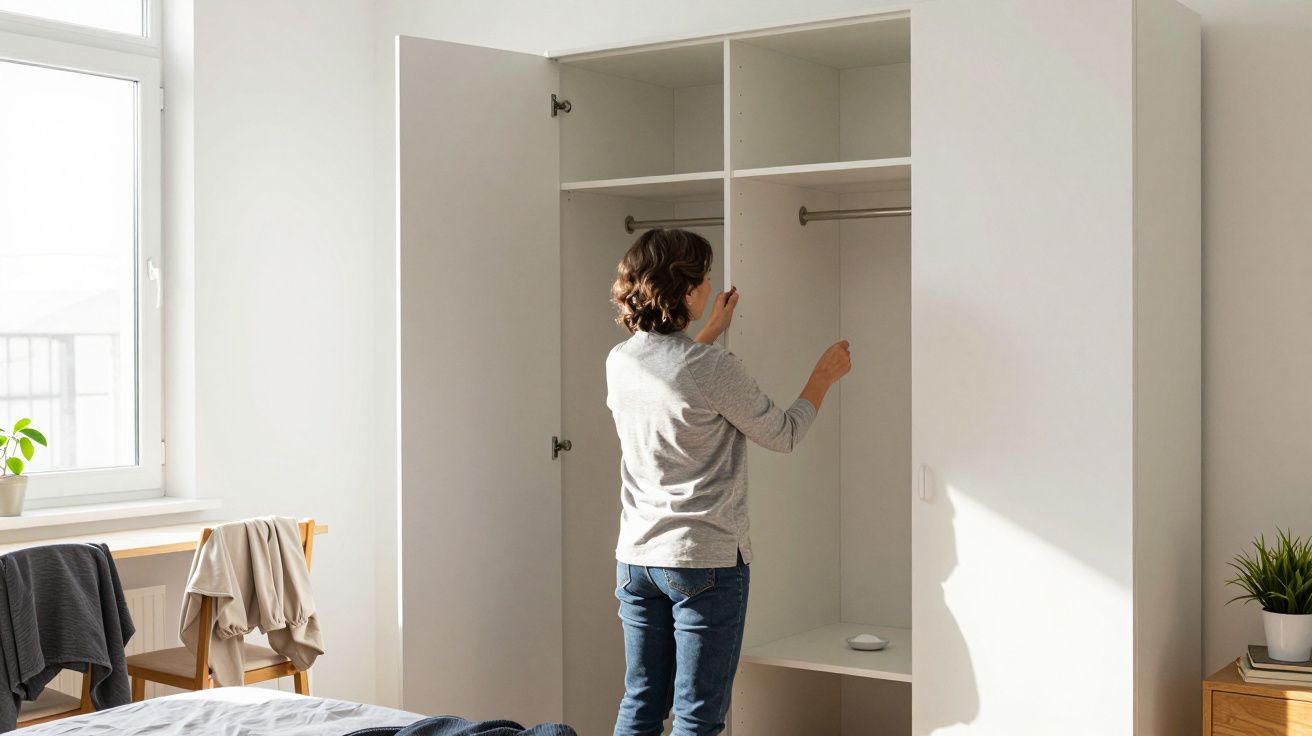
You open the wardrobe, hunting for a favourite jumper, and the smell reaches you first: a flat, stale, vaguely damp note that no scented sachet quite covers. The clothes are clean. The house is heated. Yet the air behind those doors feels like it belongs to another season.
Previous generations knew this problem well, and they had a low-tech answer: they let the wardrobe breathe. No gadgets, no humming dehumidifiers, just a regular ritual of emptying, opening and airing that quietly kept fabric, wood and walls from turning musty in the first place.
That simple routine still works – if you do it properly, and at the right moments.
The “airing day” habit our grandparents didn’t call a hack
In many homes, there used to be an unspoken rule: on washing day or once a week, cupboards, drawers and wardrobes were opened wide. Doors stood ajar, hangers came out, blankets went over chairs or out on the line. It looked like a minor chaos; it was actually preventative care.
Airing day treated the whole wardrobe, not just the clothes. The timber, shelves, backing boards and corners all got a turn in moving air and light.
Modern houses are better insulated, often smaller, and more cluttered. We seal rooms for warmth, dry laundry indoors and pack wardrobes tight. All of that traps moisture and odours. Reviving the old airing habit restores a missing step in basic home maintenance – especially in bedrooms and spare rooms that rarely see a strong breeze.
Why wardrobes turn musty even in “dry” homes
A musty wardrobe is usually not about dirt; it is about trapped moisture and still air.
- Warm bodies and bathrooms add humidity to the house.
- Laundry not quite dry gets put away “to finish off” in the cupboard.
- Exterior walls and alcoves can be cooler, making moisture condense on the back panel.
- Packed rails mean fabric can’t release what it absorbs.
Over days and weeks, that slight damp builds up. Wood and cardboard boxes soak it in; fabric holds on to it. Mould spores do not need a leak to get started, just a pocket of air that stays humid and immobile.
Think of your wardrobe as a mini-room. If no fresh air ever flows through that room, the atmosphere will grow flat and stale, whatever air freshener you add.
The core trick: a proper, deliberate airing
The “old-fashioned airing trick” is not simply leaving the door open for an hour. It is a small, structured routine that lets the wardrobe, contents and surrounding wall reset.
Step 1: Pick the right moment
Choose a day when:
- The forecast is dry (sunny or breezy is a bonus).
- You can open a window in the room for a few hours.
- Heating is on low to moderate in cold months, so air can move.
Avoid days when the air outside is heavy with drizzle; you cannot dry out a cupboard with damp air.
Step 2: Clear more than you think
Remove:
- Anything obviously damp or recently ironed with steam.
- Bulky items that block air flow, such as suit carriers, coats packed in plastic and big bags.
- Boxes sitting flush against the back or floor.
Lay clothes over chairs, a clean bed or, better still, on an indoor airer near an open window. The goal is space: you want to see bare sections of back panel, shelf and floor.
Step 3: Open it up and cross‑ventilate
For at least two to three hours:
- Open the wardrobe doors fully.
- Open the room window wide (or two windows for a cross-breeze, if you can).
- Leave the room door open so air can pass through, not just swirl.
If the wardrobe backs onto an exterior wall that tends to feel cold, place a small, safe gap at the base (a wedge, offcut of wood, or lifting the unit slightly) to let air reach behind and underneath. Older houses often relied on those hidden gaps more than we realise.
Step 4: Let warmth do some of the work
You do not need strong heating, but you do need the room to be warmer than outside so moisture is encouraged to leave:
- In winter, keep the radiator on its normal setting while you air.
- In summer, rely on sun and breeze; avoid running a humidifier in that room on airing day.
This gentle temperature difference is what made “airing cupboards” so effective: not hot, just consistently a bit warmer and drier than the rest of the house.
Small additions that quietly boost the effect
The trick is air first, extras second. Once you have done the full airing, a few low-tech helpers make it last longer.
| Helper | What it does | Where to use it |
|---|---|---|
| Plain chalk or salt | Absorbs minor background moisture | In a dish on a shelf, replaced regularly |
| Bicarbonate of soda | Traps odours | In an open jar, away from direct fabric contact |
| Wooden hangers | Breathe better than plastic, help regulate moisture | For coats, jackets and woollens |
- Chalk or coarse salt: Place in a shallow dish or small cloth bag on a shelf. Check monthly; if it clumps, replace it. It will not compete with a leaking pipe, but it will smooth out day-to-day humidity swings.
- Bicarbonate of soda: A ramekin tucked at the back of a shelf can tame lingering smells. Replace every couple of months.
- Ditch the plastic bags: Long-term storage in sealed garment bags is a recipe for stale air. Use breathable covers (cotton, calico) or none at all, and rely on regular airing instead.
No bowl of salt will rescue a wardrobe that never gets opened. The extras are the polish, not the main repair.
How often to air – and how to fit it into real life
You do not need a full airing every weekend. Regular, light habits cover most needs, with an occasional deep reset.
As a baseline
- Once a week: Open wardrobe doors for a couple of hours while you are at home, with the bedroom window on the latch or cracked open.
- Once a month (or at the change of season): Do a “proper airing” – partial empty, doors wide, good cross-ventilation as described earlier.
In damp or tricky houses
If you have:
- An older, poorly insulated property;
- Wardrobes against external or north-facing walls;
- A bedroom that rarely sees sunshine,
then lean slightly heavier on airing:
- Aim for a proper airing every 2–3 weeks through autumn and winter.
- Rotate where the bulkiest items sit, so no corner stays permanently smothered.
Consider sliding the whole wardrobe a few centimetres off a cold wall, if space allows. Those hidden centimetres often make the difference between a dry back panel and concealed mould.
Signs your airing routine is working
You should notice:
- The “first whiff” when you open the doors becomes neutral rather than damp or sweetly stale.
- Fabrics feel drier and “crisper” to the hand, even if they are soft.
- Less fogging on nearby windows after showers, because the room handles humidity better overall.
If odour persists, treat it as feedback, not failure. It means you may need:
- A longer airing session;
- Less packing density on the rail;
- A check for hidden issues (a slow leak, damp skirting, or mould behind the wardrobe).
Common mistakes that keep wardrobes musty
A few habits quietly undo the good work:
- Putting away “nearly dry” laundry: If you can feel coolness or slight damp at seams and waistbands, they need more line time.
- Storing shoes directly under hanging clothes: They carry sweat and outdoor moisture; box them or place a washable mat and air that space more often.
- Using strong perfumed sachets as a cover‑up: They can mask a problem long enough for mould to get established behind the scenes.
Think of fragrance as the last layer. Fresh air and dryness come first; scented soap or lavender can follow once the basics are right.
How this compares to a dehumidifier
Dehumidifiers have their place, especially in basements or very wet homes. But they are not magic, and they are not the only route to a fresh wardrobe.
| Approach | Pros | Limits |
|---|---|---|
| Old‑fashioned airing | Free, silent, no energy use; treats wood, walls and fabric together | Needs planning and suitable weather |
| Dehumidifier in room | Strong moisture removal, useful in problem houses | Consumes power; can dry air too far; still needs cupboards opened |
In many typical British homes, a blend works well: normal heating, decent ventilation in the bedroom, and a conscious airing habit. The dehumidifier, if you have one, then becomes a backup tool for very wet spells, not a permanent crutch.
Simple routine you can start this week
To make it realistic:
- Pick one “airing afternoon” this week for your main wardrobe.
- Empty the bulkiest items, follow the proper airing steps, and add a small dish of chalk or salt when you put things back.
- Set a recurring reminder on your phone for a lighter weekly airing – doors and a window open while you change the bed or clean the room.
- As seasons change, combine wardrobe swaps (winter to summer clothes) with a deeper airing and a quick check behind and underneath the unit.
Kept up quietly, that rhythm does what our grandparents expected it to do: keep clothes and cupboards honest, with no hum, no must, and no machines.
FAQ:
- Will airing alone remove mould that’s already visible? No. Airing helps prevent mould and stop mild problems getting worse, but visible mould on walls, skirting or wardrobe panels needs cleaning with an appropriate mould cleaner and, if possible, fixing the underlying cause (such as leaks or cold bridging).
- How long should a proper airing session last? Aim for at least two to three hours with doors fully open and some form of ventilation in the room. Longer is fine, but you’ll see most of the benefit in that first window if the air is moving.
- Is it safe to air clothes outside in winter? Yes, as long as it’s dry. Cold air can still carry moisture away. Fabrics may not feel warm, but they will dry and freshen, especially if there’s a bit of breeze.
- What if I can’t open the window because of noise or pollution? Use internal airflow: keep the wardrobe and room doors open, run an extractor fan elsewhere in the flat if you have one, and time your deeper airing for quieter, cleaner parts of the day. It is less effective than fresh outdoor air, but still better than total stillness.
- Do scented sachets or cedar blocks replace the need for airing? No. They can help with mild odours and insects, but they do not remove moisture. Use them as a complement to regular airing, not as a substitute.





Comments
No comments yet. Be the first to comment!
Leave a Comment