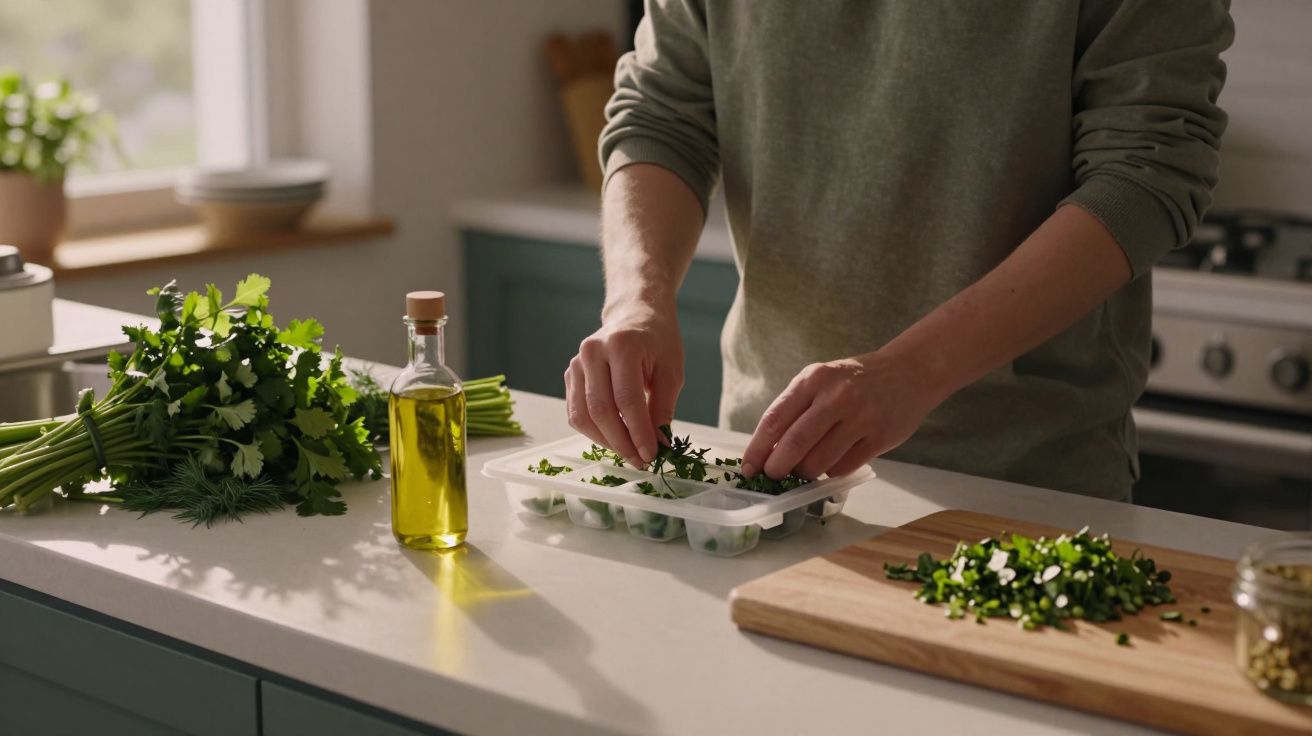
On Sunday you bought three lush bunches of coriander, parsley and dill, all optimism and green fragrance. By Wednesday they’ve collapsed in the salad drawer, stems slimy, leaves grey at the edges, smelling faintly of bin day. You peel away the worst bits, salvage a sprig or two, and quietly resent the £3 you’ve just thrown away.
The problem isn’t you. Supermarket herbs are sold in generous bunches that few households can get through in a couple of days. The fridge slows decay but doesn’t stop it; moisture creeps in, flavours dull, and suddenly last night’s bright chimichurri is off the menu.
There is, however, one cheap kitchen gadget that fixes this on autopilot: the humble ice cube tray. Used well, it turns spare herbs into neat flavour bombs that wait patiently in your freezer instead of dying in your crisper.
You don’t need special equipment. You don’t need a full afternoon. Just a tray, some oil or water, and ten spare minutes after supper when the chopping board is already out.
Why fresh herbs go slimy so quickly
Fresh herbs are mostly water wrapped in delicate plant cells. Once they’re cut, those cells start leaking, especially when they sit in a cold, damp, slightly airless drawer. Moisture pools, bacteria love it, and within a day or two that bright green turns limp and swampy.
Fridges also run on airflow. When herbs are crammed into bags or tied tightly with elastic, cold air can’t circulate and condensation forms. That’s why bunches stored “as is” from the shop often rot in the middle first.
Freezing flips the script. It stops bacterial growth almost instantly and locks in flavour compounds that would otherwise evaporate or oxidise in the fridge. The texture does soften when thawed, but for cooking, that doesn’t matter; you’re after taste, not salad‑bowl looks.
Think of the freezer not as a graveyard for forgotten food, but as a pause button for peak flavour.
The ice cube tray trick, step by step
The method is simple, but small details make the cubes far more useful later.
Gather and sort
- Pick through your herbs, discarding any yellow or slimy bits.
- Strip coarse stalks from soft herbs (coriander, parsley, basil), and keep woody stems (thyme, rosemary) if you like their flavour.
Wash and properly dry
- Rinse quickly under cold water or swish in a bowl.
- Spin in a salad spinner or pat dry thoroughly in a clean tea towel. Excess water = more ice crystals and less flavour.
Chop to cooking size
- Roughly chop soft herbs.
- Finely chop woody herbs so they distribute better in sauces or stews.
Pack the tray
- Use a clean ice cube tray (silicone ones pop cubes out more easily).
- Loosely fill each compartment about two‑thirds full with chopped herbs. Don’t ram them down hard; leave space for liquid.
Top up with your chosen liquid
- Pour in just enough to cover the herbs:
- Olive or rapeseed oil for cooking.
- Melted (then slightly cooled) butter for finishing sauces or steaks.
- Water or stock if you prefer to add fat separately.
- Pour in just enough to cover the herbs:
Freeze flat
- Tap the tray gently on the worktop to release air bubbles.
- Freeze for several hours, ideally overnight, until solid.
Bag and label
- Pop cubes out, transfer to a labelled freezer bag or box, and note:
- Herb type
- Liquid (oil, butter, water, stock)
- Month/year
- Return to the freezer. Trays are now free again for the next batch.
- Pop cubes out, transfer to a labelled freezer bag or box, and note:
From now on, when a recipe casually demands “a handful of fresh herbs” and you have none on the windowsill, you’ve got a shortcut waiting in the freezer door.
Which herbs (and liquids) work best
Almost all soft, leafy herbs freeze well when chopped and suspended in a liquid. Woody varieties can be frozen too, but you’ll want to chop them finely so they don’t feel twiggy.
| Herb or mix | Best liquid to freeze in | Typical use later |
|---|---|---|
| Parsley, coriander, dill | Water, stock or neutral oil | Soups, stews, curries, fish dishes |
| Basil, chives, tarragon | Olive oil or butter | Pasta, risotto, creamy sauces, eggs |
| Rosemary, thyme, sage | Olive oil or butter | Roasted veg, traybakes, pan sauces |
| Mixed “green bunch” odds and ends | Stock or oil | One‑pan dinners, casseroles, grains |
| Mint (alone) | Water | Peas, new potatoes, yoghurt sauces, drinks |
A simple rule:
- If you’ll fry or roast it later, freeze in oil or butter.
- If it’s heading into something liquid, water or stock is fine.
Oil or butter cubes also help herbs keep their colour and aroma a bit better, as the fat protects delicate flavour molecules from freezer burn.
How to cook with herb cubes
Once you’ve got a bag of cubes ready, they behave like ready‑measured spoonfuls of chopped herbs plus fat or liquid.
Roughly: - 1 standard cube = 1–2 tablespoons of chopped herbs - 2 cubes = a generous “small bunch” in many recipes
Easy ways to use them:
Start a sauce or soup:
Drop a frozen herb‑in‑oil cube into a warm pan instead of plain oil, then add onions, garlic and the rest. You’ve built instant flavour.Upgrade weeknight traybakes:
Toss potatoes or veg with a cube or two melted in the microwave. Roast as normal. It tastes like you used a fresh bundle of thyme or rosemary.Finish pasta or grains:
Stir a butter‑based herb cube into hot pasta, rice or couscous in place of (or alongside) pesto. A squeeze of lemon and some salt, and you’re done.Rescue leftovers:
Warm yesterday’s soup, stew or lentils with a cube dropped in at the end. It freshens everything without another chopping session.Boost eggs:
Melt a cube in a pan, then pour in beaten eggs for an instant herb omelette or scrambled eggs that taste restaurant‑level with no extra effort.
A chef friend calls them “lazy person’s mise en place”: all the chopping and measuring done on a quiet night, saving you on the busy ones.
Make it a tiny kitchen habit
The trick only works consistently if you hook it onto something you already do, rather than waiting for a mythical “batch‑cooking Sunday”.
Try this:
- After a recipe that uses most but not all of a bunch, immediately:
- Put the board back on the counter.
- Chop the remaining herbs.
- Fill at least one row of your ice tray.
- Keep a permanent marker in the drawer with freezer bags so labelling is friction‑free.
- Aim for “good enough”, not perfect. A slightly mixed “green cube” still beats throwing herbs away.
Here’s a quick checklist you can pin to the fridge:
- Sort and discard any slimy stems.
- Wash fast, dry thoroughly.
- Chop and loosely pack tray cells.
- Cover with oil, butter, water or stock.
- Freeze flat, then bag and label.
You’ve just turned something perishable into a shelf‑stable ingredient that tastes of summer in mid‑January.
FAQ:
- Will frozen herbs taste as good as fresh? For cooked dishes, they’re extremely close. You lose some texture, so they’re not ideal for raw salads or garnishes, but the flavour in soups, stews and sauces is excellent.
- How long do herb cubes last in the freezer? For best flavour, aim to use them within 3–6 months. After that they’re still safe if kept frozen, but may taste a bit dull or pick up freezer odours.
- Can I freeze supermarket “living” herb pots this way? Yes. When they start to look tired on the windowsill, harvest what’s left, wash, dry, chop and cube as usual.
- My cubes go a bit brown. Is that normal? Slight darkening, especially with basil or coriander, is normal and doesn’t mean they’re unsafe. Using oil or butter instead of water, and packing the herbs in well, helps keep colour brighter.
- Do I need to defrost herb cubes before cooking? Generally no. Drop them straight into hot pans, soups or sauces. For delicate dishes, you can thaw a cube in a small bowl on the counter for a few minutes, then stir in at the end.






Comments
No comments yet. Be the first to comment!
Leave a Comment