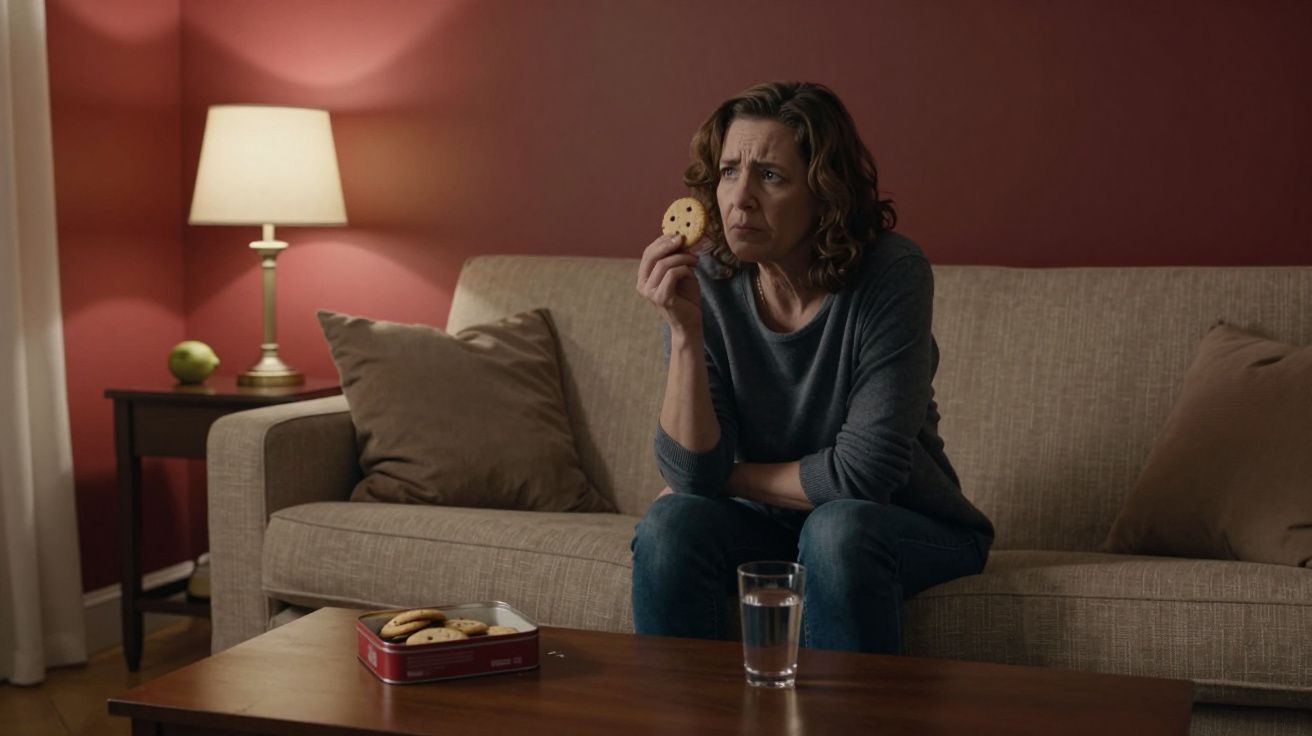
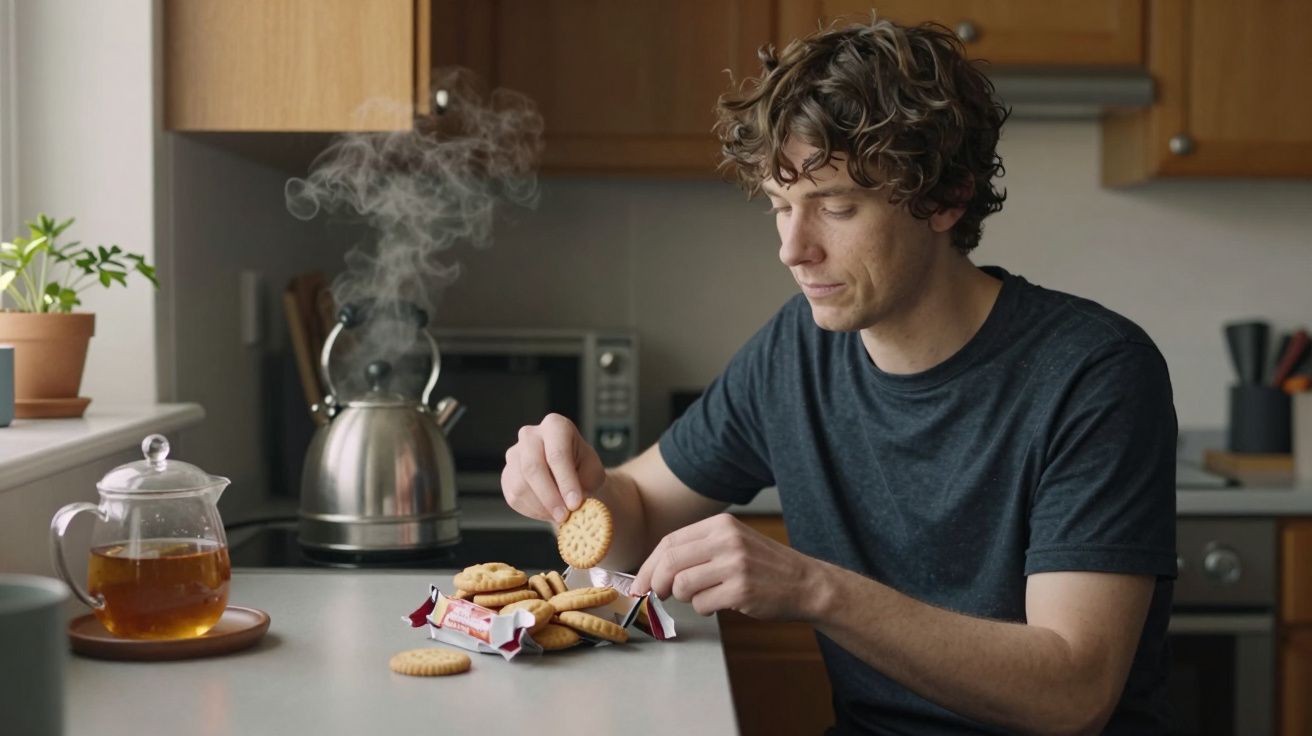
At 9.47 p.m., you are not “hungry”. You are wandering. From sofa to kitchen and back again, grazing the biscuit tin the way you scroll your phone: absently, almost automatically. The TV glows, the lamp is low, and the room feels like it is leaning in. You tell yourself you lack willpower. A psychologist would gently point at the walls.
Look at them closely next time you reach for crisps. Are they warm, golden, a bit terracotta? Do they throw a soft, sunset cast over everything after dark? That cosy, café‑adjacent glow you love might be doing something more than flattering your cushions. It might be priming your appetite.
Psychologists have been quietly studying this for years, in canteens and mock living rooms with hidden bowls of snacks. Again and again, a single family of colours shows up as an accomplice. Not neon yellow. Not cold grey. Warm reds - from tomato to terracotta - consistently make us more likely to nibble. Sometimes without noticing until the packet is empty.
The sneaky way wall colour talks to your appetite
We like to think we eat because we are hungry, full stop. In reality, your brain takes constant cues from your surroundings: light, sound, smell - and yes, colour. Warm reds and red‑orange tones are what psychologists call “arousing hues”. They nudge up heart rate and alertness, but they also sharpen attention to rewards, including food.
In lab studies, people in red‑lit or red‑walled rooms were more likely to choose snacks, rated food as more appealing, and ate slightly more than those in blue or neutral rooms. The difference is not dramatic - think an extra handful rather than an extra meal - but over hundreds of evenings, it adds up. *It is not that red walls force you to eat; they make saying “no, not bothered” just a fraction harder.*
There is a cultural layer on top. Red is threaded through our idea of indulgence: velvet cinema seats, wine bars, fast‑food signs, glossy restaurant interiors. Your brain has learnt that warm red is where treats happen. So when your living room borrows that palette - terracotta feature wall, brick‑red paint, russet panelling - it can slip into the same mental category: place where we snack.
The twist is that at home, you are also relaxed and slightly tired. That is when these cues are most powerful. The combination of low light, a warm red surround and effortless access to food sends your brain one clear, quiet message: go on then.
Is your living room quietly doubling as a snack bar?
Most of us did not pick wall colours with crisps in mind. We chose what felt welcoming after work and vaguely stylish on Instagram. But if you are wondering why evenings on the sofa come with a side of biscuits, look at the room as if you were a researcher.
Notice three things:
- Wall colour and undertones. Reds and red‑browns are the obvious culprits, but creams and beiges with a strong peach or terracotta undertone can have a similar, softer effect - especially under warm bulbs.
- Lighting. “Soft white” and “warm glow” bulbs can turn even a neutral wall slightly pinkish at night. That cosy, pub‑at‑Christmas feel is lovely for mood and terrible for ignoring chocolate.
- Food visibility. Bowls on the coffee table, a sweet jar in view, a direct line of sight to the kitchen - these all work with the colour to make snacking feel like part of how you “use” the room.
You will know the pattern. You start an episode intending not to snack, then, twenty minutes in, you “just fancy something”. Nothing dramatic. Just the room and your habits quietly agreeing.
“It is not about blaming the paint,” as one environmental psychologist put it. “It is about realising your willpower has been negotiating with the room the whole time.”
If you like your red walls (or that sunset‑peach you waited six weeks for the decorator to fit in), you do not need to repaint tomorrow. But you can decide whether you want your living room to say curl up and graze or curl up and rest.
How to dial the snacking effect up or down
Colour is not magic, but it is a lever. You can pull it gently, rather than feel pushed around by it. Think of three levels of change: paint, lighting, and props.
1. Paint and big surfaces
If you are planning a repaint anyway and would like your evenings to be less snack‑centric, lean towards cooler, calmer tones:
- Soft blue‑greys
- Sage or eucalyptus greens
- Neutral greige with cool rather than pink undertones
Studies suggest that blues and greens, especially in softer shades, are less tied to food in our minds. They are also associated with nature and rest, which can make you more aware of internal signals: am I actually hungry or just restless?
If you love warmth, keep it to accents - cushions, throws, a print - rather than whole walls. *The larger the red‑orange area, the more your brain reads “this is the dominant mood here”.*
2. Lighting: your quickest win
You do not need a roller and a weekend to change the feel of a room. Bulbs are faster.
- Swap some very warm bulbs (marked 2200–2700K) for neutral white (around 3000–3500K) in the living room.
- Use dimmers or layered lamps so you can have focused pools of light (for reading or a hobby) instead of a soft glow that turns everything café‑coloured.
- Avoid LED strips or lamps that cast a pinkish hue straight onto your walls and coffee table.
A neutral light on a neutral wall is less likely to trigger that “snack lounge” association. You will still feel cosy; you will just feel slightly less like ordering a second dessert.
3. Props, rituals, and where the food lives
Even in a red‑toned room, you can change what your brain expects to happen there:
- Keep visible snacks out of the room. A fruit bowl in the kitchen is one thing; a biscuit tin by the remote is another.
- Put non‑food comforts within reach: a soft throw, a good lamp, a book or puzzle. Make “settling in” less about opening a packet.
- Create a small, defined snack ritual. If you want crisps, put a portion in a bowl in the kitchen, sit, eat, finish, then stop. Avoid endless topping‑up during a three‑episode run.
Let us be honest: nobody does this perfectly every night. The aim is not a snack‑free life; it is to stop feeling like the room is always one step ahead of your intentions.
Colours, cravings and where they actually help
You do not have to treat appetite‑boosting colours as enemies. You can put them where you genuinely want food to feel welcome, and keep them softer where you would like a break.
| Colour tone | Typical effect on eating | Where it can help you |
|---|---|---|
| Warm reds / terracotta | Heightens appeal of snacks and treats, encourages lingering | Dining rooms for slow, sociable meals; restaurants, entertaining spaces |
| Cool blues / blue‑greys | Slightly dampens appetite, boosts calm and focus | Living rooms if you snack mindlessly; home offices, bedrooms |
| Soft greens / blue‑greens | Neutral to mildly calming, not strongly tied to food | Multi‑use family rooms, open‑plan spaces |
The research is not perfect or enormous, and people differ. But as a rule of thumb, warm red walls plus soft yellow light plus easy snacks is the combination that makes resisting nibbles hardest. If that sounds like your living room, you have just found one very practical lever you can pull.
What this really says about comfort and control
We like to frame late‑night snacking as a character flaw: not enough discipline, not enough “clean eating”. It is quieter and more honest to admit that our homes are powerful co‑authors of our behaviour. Wall colour is just one line in that script, along with sofa depth, screen size, and how far it is to the fridge.
Changing a colour will not fix emotional eating or a stressful job. But it can take some friction out of evenings where you simply do not want crisps to be the default. It is a design tweak, not a diet. You keep the comfort, you keep the pleasure - you just stop handing so much power to a painted surface.
Next time you find yourself standing in the kitchen at 10 p.m. with a packet in your hand, pause on the threshold and glance back at your living‑room walls. Ask, without judgement: What is this room inviting me to do? Then decide, quite deliberately, whether you still want to say yes.
FAQ:
- Is red always “bad” for eating habits? No. Warm reds and terracottas can be great in dining rooms where you want meals to feel generous and sociable. It is mainly in mindless‑snack zones - sofa plus TV plus easy food - that they can nudge you towards extra grazing.
- Do I really need to repaint to change anything? Not necessarily. Adjusting your lighting, moving visible snacks out of sight, and adding cooler‑toned textiles can all soften the appetite effect without touching the walls.
- Does blue always suppress appetite? Blue tones often make people slightly less interested in food, especially under cooler light, but the effect is modest. If you love blue, use it because it calms you, not as a strict eating “hack”.
- What if I rent and cannot change the walls? Work with lamps, bulbs, curtains and rugs. A big, cool‑toned rug and more neutral lighting can balance warm walls enough to change the overall signal the room sends.
- Is colour more important than willpower? No, but it changes how much willpower you have to spend. A room that is not constantly hinting at food makes it easier to follow the habits you already want, instead of fighting the space you live in.


Comments
No comments yet. Be the first to comment!
Leave a Comment