The panic didn’t arrive as a red bill or a bounced payment. It crept in one Tuesday night, standing in front of a half-open fridge, wondering how a week’s wages had vanished on “just a few bits from the shop”.
There was food, technically. Half a cucumber, three yoghurts nobody liked, two open bags of grated cheese and some lonely wraps. Nothing that wanted to become dinner without effort, and definitely nothing that looked like the £180 you’d just watched leave your account in dribs and drabs.
You’ve probably had some version of the same moment, phone in hand, scrolling through your banking app. £7.40 for “top up”. £12.60 for “just milk and fruit”. £23 on a “quick” trip that mysteriously includes ice cream, crisps and a scented candle. No single shop is outrageous. Added together, they’re a second food bill you didn’t plan.
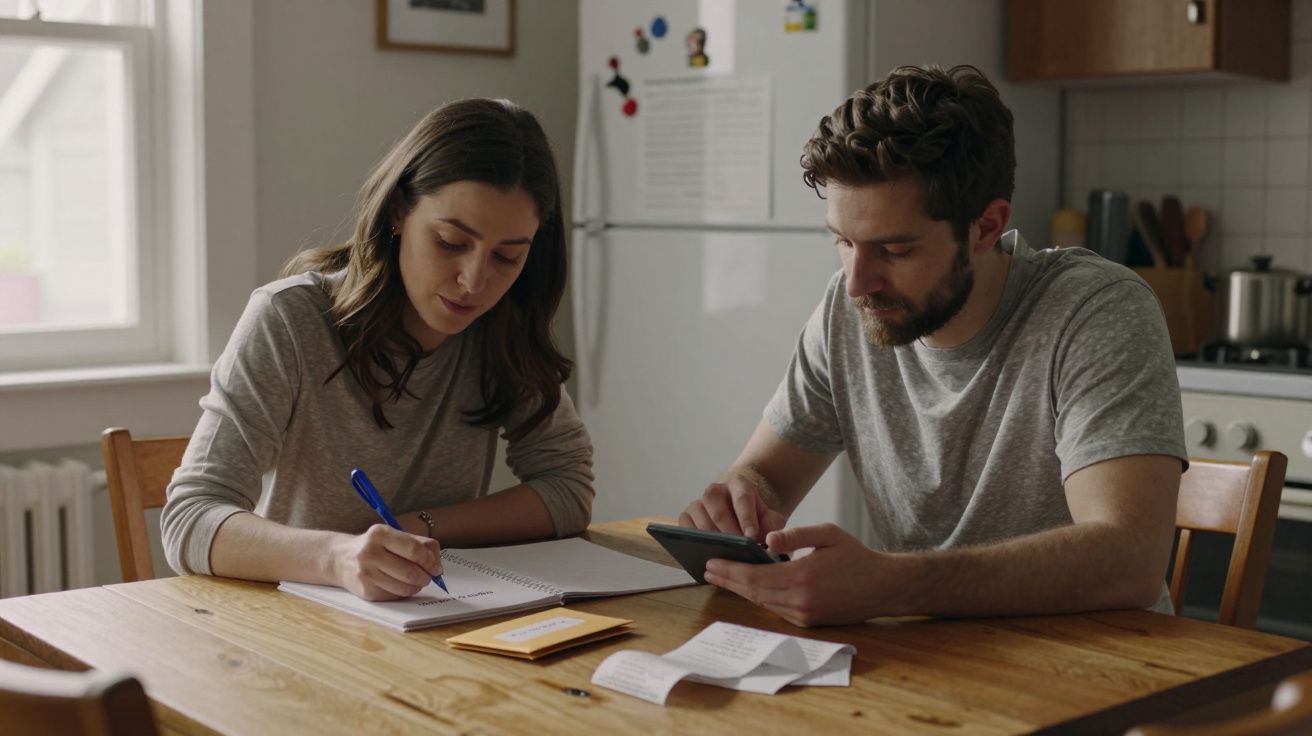
So one family did something that felt almost old-fashioned: they pulled out a stack of plain envelopes and a biro. No app. No spreadsheet. Just a simple, slightly scruffy system that reset their food spending in a fortnight.
The food shop that quietly got out of hand
On paper, their numbers made sense. A couple in Manchester with two kids, both working, one big supermarket delivery every two weeks, a few top-ups in between. They weren’t eating out much, they weren’t ordering takeaway every night. Yet the total at the end of the month kept sneaking over £700, then £750.
The problem wasn’t one huge blow-out. It was drift. Extra snacks for packed lunches “just in case”. A bottle of wine because it had been a long day. Popping into the corner shop without checking what was already at home. A slow leak, not a burst pipe.
When they tried to “be better”, it lasted three days. A fresh budgeting app, a colour-coded spreadsheet, good intentions that dissolved the first time everyone was tired and hungry at 6pm. The system was too abstract. The money still felt like it lived in the bank, not in their hands.
The envelopes changed that in one weekend.
What the envelope system actually is (and why it works in two weeks)
The envelope system is brutally simple: you split your food budget into a few clear pots, give each pot an envelope, and stop spending when the envelope is empty.
You can use actual cash, or a card with a pen-and-paper tally inside each envelope. The power isn’t in the stationery; it’s in making the limits visible. You see the money thinning out. You feel the trade-offs before you’re standing at the till.
For food, it works fast because most of us shop on a weekly or fortnightly rhythm. Two pay cycles of using envelopes is enough to expose the small habits that cost you £80–£150 a month without feeling luxurious.
- The big shop stops ballooning because its envelope can’t.
- The “I’ll just pop in” habit meets a real, shrinking number.
- Takeaways become a deliberate choice, not a reflex when the fridge looks uninspiring.
You’re not tracking every grain of rice. You’re just deciding where this fortnight’s food money is allowed to go - and where it isn’t.
Set it up in 20 minutes at the kitchen table
You don’t need pretty stationery. A stack of post, four or five envelopes you already have, and a pen are enough.
1. Pick a short time frame
A fortnight works well for most British families because:
- Many people are paid monthly but shop every 1–2 weeks.
- Fresh food rarely behaves for longer than two weeks.
- It’s short enough to “just try it” without feeling trapped.
Decide how much you can afford for all food for the next two weeks - including supermarket shops, top-ups, takeaways and work lunches. Be honest. If you usually hit £220, don’t pretend you can do £120 overnight. Aim for a 10–15% cut, not a fantasy.
2. Create 4–5 envelopes
Write one category on each:
- Main Shop – your big supermarket delivery or in-person trolley run.
- Top-Ups & Fresh Bits – milk, bread, fruit, veg, forgotten ingredients.
- Packed Lunches & Snacks – kids’ lunchboxes, work snacks, after-school stuff.
- Takeaway & Eating Out – all fast food, Deliveroo, chippy, café lunches.
- Buffer (optional) – a small “oh no, we’re out of…” safety net.
3. Put money (or a tally card) inside
- If you’re comfortable using cash, withdraw the total and split it physically.
- If you prefer your debit card:
- Write the amount for each envelope on a small card.
- Every time you spend, jot the date and amount on that card.
- Subtract until you hit zero - then you’re done for that envelope.
Tape the envelopes to the inside of a cupboard door, or keep them in a shallow tray where you prep food. They need to live where decisions are made, not buried in a drawer.
4. Agree two or three non-negotiables
Before you start, decide together:
- Which envelope pays for what.
- What happens when one envelope is empty.
- Whether you’re allowed to borrow from another, and how often.
Let’s be honest: nobody sticks perfectly to new rules in week one. The point is not perfection. It’s noticing what empties fastest, and whether you like your money going there.
How one British family actually uses it
Back to the Manchester family. They set a £260 food budget for a fortnight, down from an average of around £290.
They split it like this:
- Main Shop: £170
- Top-Ups & Fresh Bits: £40
- Packed Lunches & Snacks: £25
- Takeaway & Eating Out: £25
In week one, the Main Shop envelope felt tight but doable. The shock came from the Top-Ups envelope. By the Thursday, it was already light. Those “only popping in for milk” trips were quietly swallowing £5–£12 a time.
The envelopes forced different choices:
- Before going to the shop, they checked the Top-Ups money and the fridge.
- If there was £6 left, they wrote a tiny list to match it.
- Crisps came out of the Snacks envelope, not the Top-Ups one, so buying them meant fewer lunchbox treats later.
On day ten, everyone was exhausted and the Takeaway envelope still had £15 in it. They ordered pizza - happily. It was a planned treat, not a guilty shrug. The difference wasn’t the pizza; it was the permission.
By the second fortnight, they nudged £10 from Takeaways into Top-Ups, because that was where the real pressure lived. Their total food spend had dropped by around £50 a fortnight. No app. No spreadsheet. Just envelopes telling the truth.
The tiny rules that make it stick
A system this simple stands or falls on a few boring-but-powerful rules.
- Look before you leave. Check your envelopes before you grab your keys, not in the queue.
- Don’t rescue one envelope with another more than once. If you keep robbing Snacks to feed Takeaways, you’ve learned something about your priorities.
- Treat the buffer as an emergency, not a bonus. It’s for broken dinners and surprise guests, not for upgrading to branded cereal.
And one more: if an envelope empties early, don’t call it failure. Call it data.
Maybe £25 isn’t realistic for lunches with two hollow-legged teenagers. Maybe £40 on Top-Ups is far too generous when you already have three types of cheese at home. Adjust after two fortnights, not after two days.
A simple breakdown you can copy
Here’s a sample structure for a family of four aiming for around £240 over two weeks:
| Envelope | Typical use | Why it helps |
|---|---|---|
| Main Shop | Bulk buys, frozen food, cupboard basics | Anchors most meals in one planned trip |
| Top-Ups | Milk, bread, fresh fruit & veg | Stops “just popping in” turning into £25 |
| Snacks & Lunches | Lunchbox bits, crisps, yoghurts, work lunches | Makes treats visible instead of accidental |
| Takeaway & Eating Out | Friday night curry, chippy, café | Keeps impulse orders inside a clear limit |
Tweak the names so they feel natural to your household. “Kids’ Bits”, “Date Night”, “Work Lunches Only” - whatever makes you recognise the trade-off when you open the flap.
What this changes in your week
The fridge doesn’t magically fill itself, and food prices don’t suddenly drop. But the feel of your week shifts.
You open the cupboard and see exactly how many treats are left in the fortnight. You know whether tonight’s takeaway is paid for, or whether you’re borrowing from Tuesday’s packed lunches. You stop buying yet another jar of pasta sauce when three are already lurking at the back.
- Fewer last-minute dashes to the corner shop.
- Less arguing about “who spent what” because it’s in black and white.
- Kids who start to understand that money for snacks and money for meals are not the same pot.
A money adviser once put it like this:
“If you give each job its own envelope, your brain stops carrying it all as a vague worry. You can see what’s safe to spend.”
You’re not becoming a Victorian bookkeeper. You’re just giving your food money somewhere solid to live.
If you hate faff, do the bare-minimum version
Not everyone wants five envelopes and tally marks. If your life is already full, start with the laziest version that still works:
- One envelope for the Main Shop.
- One envelope for Everything Else Food.
Write the total for each on the front. Every time you spend, scribble the new balance next to today’s date. When one hits zero, that category is closed unless you consciously decide to borrow.
Once you’ve done two fortnights like that, you’ll know whether it’s worth splitting further.
FAQ:
- Do I have to use cash for this to work? No. Cash is powerful because you see it leaving, but a card plus honest tally on paper works too. The key is making the limit visible and finite.
- What if my income is weekly, not monthly? Run the envelopes weekly instead of fortnightly. Shorter cycles can actually help if your income or shifts vary.
- Can I include household items like washing powder? Yes, if they usually come from the same supermarket shop. Either fold them into the Main Shop envelope or create a tiny separate “Household” one.
- How low should I try to go on food? Start by shaving 10–15% off what you’ve actually been spending, not what you wish you spent. If you manage easily, trim a little more next month.
- What if we blow an envelope in the first week? Use it as a signal, not a stick. Note what emptied it (school holidays, guests, night shifts), finish the fortnight as best you can, then adjust the amounts or categories before the next one.




Comments
No comments yet. Be the first to comment!
Leave a Comment