The drill started at 7.58am. Not a gentle whirr, but that raw, rattling shriek that finds the one spot behind your eyes and hammers there. Next door’s dog barked itself hoarse, someone upstairs dropped a mug, and a bedroom blind flicked up with theatrical force. In the WhatsApp group, three words arrived in all caps: “IS THAT LEGAL?”
Across the country, that question is coming up more. Letters from councils about “unreasonable DIY noise”. Leaflets in communal hallways quietly introducing “quiet hours”. Managing agents adding lines about lawnmowers to service-charge emails. The rules themselves aren’t entirely new – but the way they’re used is changing.
For years, many people treated drilling, sanding and mowing as part of ordinary life: loud, yes, but acceptable as long as it was daytime and “not too often”. Now, more neighbours are complaining, and more councils are leaning on anti-social behaviour and nuisance powers to step in. You might not notice the shift until a polite knock – or a formal warning – lands at your door.
It doesn’t help that the rules are a patchwork. What gets you a shrug in one street can trigger an investigation in the next. One household is told their Sunday mowing is fine; another receives a stern letter for the same thing. When the line between “normal” and “nuisance” feels fuzzy, tempers rise fast on both sides of the fence.
Why your usual weekend routine might now be a problem
There is no shiny new “DIY and Lawnmower Act” that bans drilling in Britain’s back gardens. Instead, councils are tightening how they use long-standing laws – particularly the Environmental Protection Act 1990 and anti-social behaviour powers – and updating their guidance on what counts as “reasonable”.
The key phrase is statutory nuisance. If noise from your home or garden is judged to be harmful to health or a serious disturbance, council environmental health officers can serve an abatement notice. Ignore that, and you can face equipment being seized and a fine that can run into thousands. It sounds heavy-handed, and in extreme cases it is meant to be.
What’s new in many areas is not the law itself, but the thresholds and expectations. Some councils have:
- Published stricter “quiet-hour” guidance for DIY and garden machinery.
- Told housing officers and wardens to flag regular noisy work sooner.
- Used fixed-penalty notices more readily after an initial warning.
Most guidance splits the week into three rough bands. Very late at night and very early morning are almost always off limits for loud work. Mid-mornings to early evenings on weekdays are generally acceptable, if you are not drilling endlessly. Weekends and bank holidays are treated as more sensitive, especially Sunday mornings.
One inspector summed it up like this:
“We’re not trying to stop people putting up shelves. We’re looking at repeat patterns – the every-weekend projects, the 7am starts, the late-night sanding. That’s when it tips from normal living into something that affects health and sleep.”
Drilling, mowing, strimming: when it tips into trouble
You can run a drill at 2pm and be fine, then run the same drill at 9pm and suddenly you’re on the wrong side of an investigation. Context matters more than the brand of tool in your hand.
When officers decide whether to act, they usually look at:
- Time of day – late evenings, nights and very early mornings are the biggest red flag.
- Frequency – one-off jobs are treated differently to noise that goes on most weekends or evenings.
- Duration – ten minutes of drilling is not the same as three hours of near-continuous hammering.
- Character of the noise – high-pitched, repetitive or thudding sounds (drills, hammers, petrol strimmers) are more likely to draw complaints.
- Location – flats with shared walls and gardens close to bedroom windows are more sensitive than detached houses with large plots.
We’ve all had that slow, angry clock-watch while a drill shrieks through the party wall. The law is trying, imperfectly, to set a fair line between the right to maintain your home and the right of others to rest and think.
A few common flashpoints:
- Evening DIY sessions after 8–9pm in flats or terraces, especially midweek.
- Early-morning lawnmowing or strimming before 8–9am at weekends.
- Long runs with pressure washers, grinders or power sanders on balconies and patios.
- Repeated use of loud petrol tools when electric alternatives are available.
Simple ways to stay on the right side of neighbours and the council
You do not have to tiptoe around your own home. It’s not about banning DIY; it’s about when and how you do it. A little planning usually prevents the angry note under the door – and the email to environmental health.
Start with these small adjustments:
- Stick to daylight, not “whenever I’m free”. Aim for late morning to late afternoon for the loudest jobs. Avoid early Sundays if you can.
- Batch your noise. Do the drilling and sawing in one or two clear chunks, rather than dotted through the whole day.
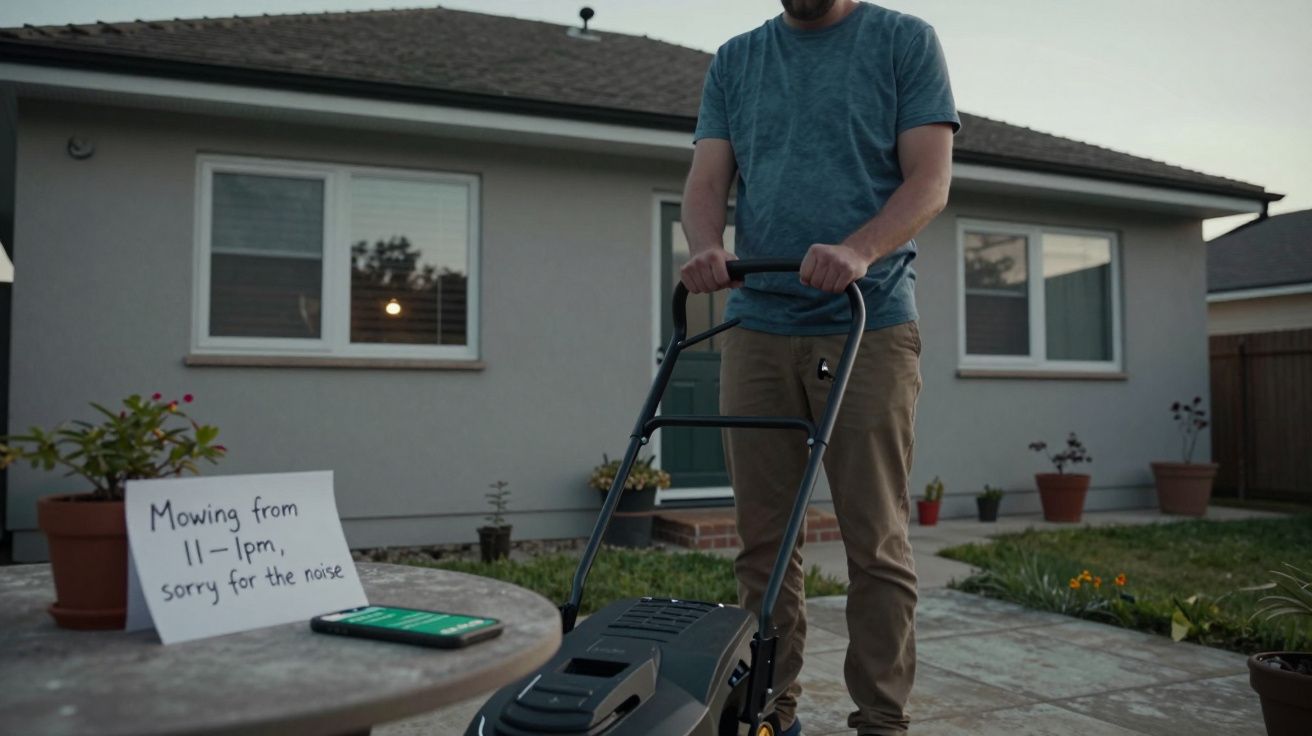
- Warn people. A quick message in the building group chat or a note in the hallway – “Drilling from 11–1 on Saturday, sorry for the noise” – can soften a lot of frustration.
- Use the quietest kit you can. Electric mowers and strimmers, rubber pads under workbenches, sharp blades that don’t scream.
- Take breaks. Ten minutes drilling, twenty minutes off. Your ears, and everyone else’s, will thank you.
If a neighbour approaches you, try not to get defensive on principle. Listen, explain what you’re doing and how long it will last, and offer a compromise – a different time, shorter sessions, or a break on Sundays.
One mediator who works with housing associations puts it bluntly:
“The fastest way to turn a grumble into a formal complaint is to say, ‘It’s my house, I’ll do what I like.’ If you show you’re trying to meet in the middle, officers are far more likely to see it as a minor issue, not a case file.”
Typical “quiet-hour” guidance – and what it really means
Exact times vary by council and housing provider, but many now publish sample windows like these:
| Activity | Common “acceptable” hours* | What it tends to mean |
|---|---|---|
| General household noise (TV, hoovering) | 7am–11pm | Normal living sounds are tolerated, but keep volume moderate at night. |
| DIY and garden machinery | 8am–6pm weekdays, 9am–1pm Saturdays, none Sundays/bank holidays | Loud work outside these times is more likely to be treated as a nuisance. |
| Professional building work | Often 8am–6pm Mon–Fri, 8am–1pm Sat, none Sundays/bank holidays | Contractors can face stricter controls and specific site conditions. |
*These are examples only. Always check your local council, tenancy or lease for the rules that apply to you.
These hours are usually guidance, not automatic fines. But they act as a benchmark. If your neighbour complains about a 10pm drilling spree and you’re well outside published hours, officers are more likely to side with them.
If you’re the one losing sleep
Constant noise from next door can feel like a drip on the forehead. The temptation is to jump straight to formal action, but the quiet route often works faster.
Try this sequence:
- Speak first, if it feels safe. Choose a calm moment, not mid-rage. Describe what you’re hearing and when, and ask if they can shift times or bunch the noisier tasks together.
- Keep a simple diary. Note dates, times, type of noise and how it affects you (woken baby, can’t work, headaches). Councils rely on this kind of detail.
- Check your council’s website. Search “noise nuisance”, “DIY noise” or “garden machinery”. Many have online forms and explain their thresholds.
- Contact environmental health. If talking has failed, your diary and any short phone recordings can help officers decide if they should visit or write formally.
- Look at mediation. Some councils and housing associations offer free neighbour mediation before things get legal.
If the council agrees the noise is a statutory nuisance, they can issue an abatement notice telling your neighbour what must change. Repeated breaches can lead to prosecution and fines. It is a powerful step, and most cases resolve before it gets that far.
What this noise crackdown says about modern neighbourliness
On one level, this is about drills and lawnmowers. On another, it’s about how closely we now live and work. More people are home all day, working from bedrooms and kitchen tables. Night shifts, caring duties and long commutes mean “normal hours” look very different from one flat to the next.
This isn’t really about noise; it’s about control and consideration. When your one quiet hour is chewed up by next door’s renovation, it feels personal, even if it isn’t meant to. When you finally have time to fix the bathroom and someone complains, that feels personal too.
The law can’t make neighbours like each other. What it can do is set a floor: a basic level of peace everyone is entitled to. The rest is human. A short note before you start the sander. A promise to avoid Sundays. An apology if you misjudge it.
We’ve all had that moment when the whine of a mower, or the crack of a hammer, feels like too much. The new, sharper use of noise rules won’t remove those moments, but it might nudge more of us to think before we press the trigger.
FAQ:
- Can I be fined just for mowing my lawn at the wrong time? In most cases, no. A single slightly-early mow is unlikely to trigger a fine on its own. Problems arise with repeated, loud use of machinery at unreasonable hours, especially after a warning or abatement notice.
- Are there national legal hours for DIY noise? There is no single UK-wide timetable that names DIY hours. Instead, general nuisance laws apply, and many councils publish their own guidance times. Courts look at reasonableness rather than a strict clock.
- What happens if I ignore an abatement notice? Breaching a noise abatement notice is a criminal offence. Councils can seize equipment and prosecute; courts can impose fines that may reach several thousand pounds for domestic cases.
- Do these rules apply to renters as well as owners? Yes. Nuisance laws apply to whoever is creating the noise, regardless of whether they rent or own. Tenancy agreements and leases may add extra “quiet hours” or conditions.
- How can I check the rules where I live? Search your council’s website for “noise nuisance” or “environmental health”, and review your tenancy agreement, lease or building handbook. If you’re unsure, you can ring the council’s main number and ask for the environmental health or anti-social behaviour team.





Comments
No comments yet. Be the first to comment!
Leave a Comment