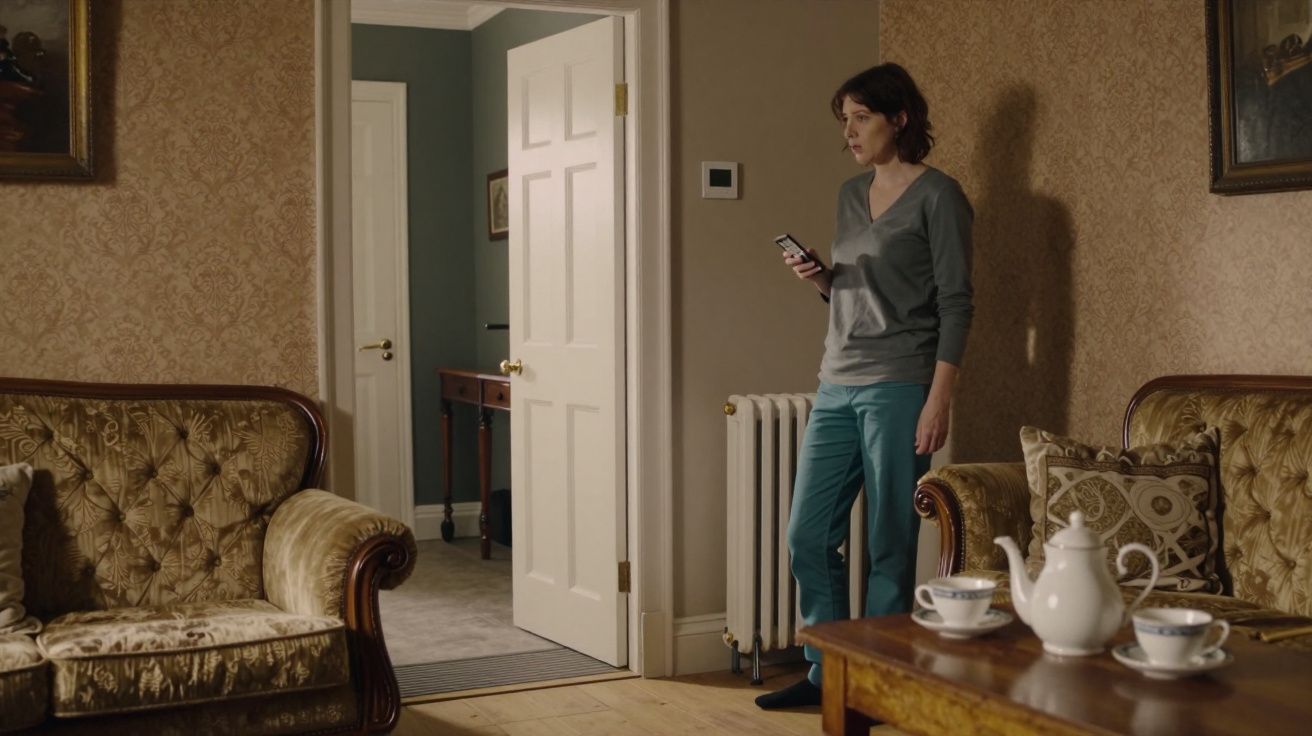
The hallway thermostat was still calling for heat when the living room felt like a greenhouse. In the next room, the door sat firmly shut “to keep the warmth in”, while the boiler cycled on and off in the background, quietly chewing through gas. It is a familiar winter scene in British homes – and one that several heating engineers say is not always the money‑saving habit people imagine.
Over the past two years of steep energy bills, “shut every door” has become standard advice. Draught excluders appeared at thresholds, thick curtains went up over doorways, and family arguments broke out over who left the kitchen door open. Yet the way central heating systems actually work means that, in many houses, aggressive door‑closing can push bills up or create cold spots and damp problems that cost more to fix later.
Why closing every door feels like the obvious move
The logic: trap heat, stop it leaking away
On a cold evening, the idea is appealingly simple: warm air once, trap it behind a door, and stop it wandering into spaces you are not using. For anyone raised on the phrase “we’re not heating the street”, the door is the final barrier between paid‑for comfort and wasted energy.
In very specific cases, that logic holds. A plug‑in electric heater in a single room will indeed run less if that room is sealed from a freezing hallway. A spare bedroom with the radiator turned off will stay a bit colder if the door is firmly shut. The trouble starts when that “one room” instinct is applied to whole‑house heating.
“Shutting a door is only a saving if you’re actually turning the heat down in that space,” one heating engineer told us. “Otherwise, the boiler is still doing the same work – or more.”
The hidden problem: how central heating thinks
Most UK homes rely on boilers and radiators or a heat pump with radiators or underfloor loops. These systems are designed around gentle circulation: warm water flows out, cooler water returns, and the appliance adjusts its output based on that temperature drop and signals from thermostats or thermostatic radiator valves (TRVs).
When you start isolating rooms with closed doors, you change the way heat moves without telling the boiler what you have done. Warm air pools in small spaces, internal walls cool on one side and warm on the other, and thermostats can be fooled into running the system longer than necessary. Energy is still being used; it is just being parked in odd places.
When shutting doors can actually waste money
Thermostats in halls and landings: the classic trap
A large number of homes still have the main room thermostat in a hallway or on a stair landing. Meanwhile, households spend evenings in a living room with the door closed “to keep the heat in”. The result is a kind of tug‑of‑war the occupants cannot see.
- The hallway stays cooler because doors off it are shut.
- The thermostat there keeps calling for heat.
- The boiler continues to run, pushing more hot water to radiators.
- The living room, with people, electronics and cooking heat, quietly overheats.
If the living room radiator has a TRV, it may throttle back once that room is hot, sending more flow to other radiators instead. The boiler still runs to satisfy the hallway stat, but the room you thought you were “saving” with a closed door ends up being the most overheated space in the house.
Close the room with the thermostat, not the room you actually sit in, and you almost guarantee wasted gas.
Small hot rooms, big hungry boiler
Modern condensing boilers and heat pumps are most efficient when they run for longer periods at lower temperatures. They like a steady flow of cooler water coming back, which allows them to pull more heat out of the system.
When you trap heat in small rooms with doors closed and crank one radiator up:
- That radiator quickly reaches the set air temperature.
- The TRV shuts or the room stat is satisfied.
- Water returns hotter to the boiler.
- The boiler cycles on and off instead of cruising steadily.
Short, hard bursts of firing are less efficient than steady, moderate running. Over time, that stop‑start pattern can also shorten the life of components such as fans and ignition parts.
Cold “sacrificial” rooms that bite back
Another common winter strategy is to turn radiators off in spare rooms and keep doors closed, effectively writing them off as cold zones to “save”. From an energy point of view, that only works well if the walls, floor and ceiling between those rooms and your main living spaces are very well insulated.
In many older British homes, they are not. Internal walls and floors leak heat in all directions. A deliberately cold box room beside a warm bedroom acts like an internal fridge, constantly pulling warmth through the wall. Moist air from the warm side can then condense on the colder surfaces next door, inviting mould.
You might see a small dip in gas usage in the short term, but pay for it with black patches behind wardrobes and a future call‑out to deal with damp.
When closing doors does help
Situations where engineers say “yes, shut it”
None of this means you should live with every door propped wide open all winter. Heating engineers point to several scenarios where closed doors are not just fine, but sensible.
- Rooms you genuinely are not heating: If the radiator is turned off or set very low and you accept that room will be cool, closing the door helps keep that decision contained.
- Direct electric heaters in a single room: Fan heaters, oil‑filled radiators and infrared panels all benefit from being used in a defined space with the door closed.
- Bathrooms while showering: Keeping the door shut reduces steam drifting into cooler areas, where it can condense and feed mould.
- Night‑time fire safety: Closing bedroom doors at night is widely recommended for fire safety. As long as radiators are balanced, this does not significantly harm efficiency.
“Think of doors as tools for comfort and safety first,” says one installer. “The energy saving comes from how you control the heat source, not from slamming doors.”
Old, draughty houses and extreme cold snaps
In very leaky homes with obvious draughts under doors and around frames, creating a smaller “core” zone you actively heat can be pragmatic, especially in a cold snap. The key difference is that engineers suggest doing it deliberately, not casually.
That means:
- Picking a cluster of rooms you will actually use.
- Ensuring radiators in those rooms are on and balanced.
- Turning radiators in outer rooms right down rather than just shutting doors.
- Accepting that the unused rooms will be genuinely cold, not just slightly cooler.
Done this way, you are matching door positions to a clear heating plan, rather than hoping doors alone will change the bill.
How to use doors so your heating works with you, not against you
Start with where your thermostat lives
The relationship between doors and your main thermostat is crucial. A quick audit can reveal where you might be going wrong.
- If the thermostat is in a hallway or landing: Try keeping nearby doors at least partly open while the heating is on, so that space reflects the average temperature of the home.
- If the thermostat is in your main living space: That room’s door position matters less for cost, but closing it could leave other areas cooler than expected.
- If you use only TRVs (no central room stat): Think in terms of zones. Doors open within a zone you want at similar temperatures; doors closed where you genuinely want a different climate.
Small behaviour changes here can have the same impact as turning the thermostat down a degree – which energy advisers consistently point to as one of the easiest savings.
Watch the boiler, not just the room
One simple experiment many engineers recommend is to pick an evening and watch how your boiler behaves with different door positions.
- Set your thermostat to a normal comfort temperature.
- Spend an hour with key doors open and listen or glance at how often the boiler fires.
- Repeat the next day with doors closed.
- Note whether the thermostat is satisfied faster, slower, or not at all.
If you find the boiler running for longer with doors shut even though some rooms feel warmer, you may have discovered a hidden inefficiency. Adjusting which doors stay open – especially near the thermostat – can trim that runtime without any loss of comfort.
Practical rules of thumb
Based on what working engineers see in real homes, these simple guidelines cover most situations:
- Keep doors partly or fully open around the main thermostat when heating is on.
- Leave doors ajar between rooms you want at roughly the same temperature.
- Close doors to unheated or rarely used rooms, but accept they will be properly cold.
- Prioritise balanced radiator settings and a slightly lower overall thermostat over door‑slamming.
- Think about moisture: doors shut for steamy bathrooms, open for airing out afterwards.
Common door‑and‑heating scenarios, compared
| Scenario | Door mostly open | Door mostly closed |
|---|---|---|
| Thermostat in cool hallway, evenings spent in warmer living room | Boiler tends to run less; hall reflects whole‑house temperature better | Boiler may run longer; living room overheats while hall struggles to warm |
| Spare room radiator off beside warm bedroom | Some heat drifts in, reducing risk of very cold surfaces | Room can become a cold box; higher risk of condensation and mould |
| Single plug‑in electric heater used in one room | Heater works harder to warm adjoining spaces | Room warms faster; lower run time for the same comfort level |
What to change this week for a quieter bill
You do not need a full system redesign to stop doors working against you. A few small checks can align your habits with how your heating already wants to behave.
- Re‑balance where possible: Make sure radiators in rooms you use most are not throttled too hard compared with others.
- Nudge the thermostat down: Once doors and TRVs are working together, many households find they can drop the set point by 1°C without noticing.
- Target draughts, not airflow: Seal obvious external draughts (letterboxes, window frames) first. Internal airflow between rooms is often helpful for even temperatures.
- Time your airing: Open doors and windows wide for short, sharp airing during the day rather than leaving one cracked all evening.
The goal is a house where the boiler can run calmly at a sensible temperature, not a patchwork of overheated boxes and chilly corridors.
FAQ:
- Does keeping all doors shut always save energy? No. It can help in very specific setups, such as a single electric heater in one room, but with central heating it often makes the boiler run longer or cycle more, which can increase consumption.
- Should bedroom doors be open or closed at night? From a safety point of view, closed is better. As long as radiators are balanced and the thermostat is set sensibly, this has little impact on energy use.
- Is it worth turning radiators off in unused rooms? It can save some energy, but it also creates colder surfaces that may attract condensation. Many engineers suggest turning them down rather than completely off and keeping an eye out for damp.
- What is more important: shutting doors or lowering the thermostat? Lowering the thermostat by 1°C typically saves more than any door‑only strategy. Doors are best used to support even heating and moisture control, not as the main tool for cutting bills.



Comments
No comments yet. Be the first to comment!
Leave a Comment