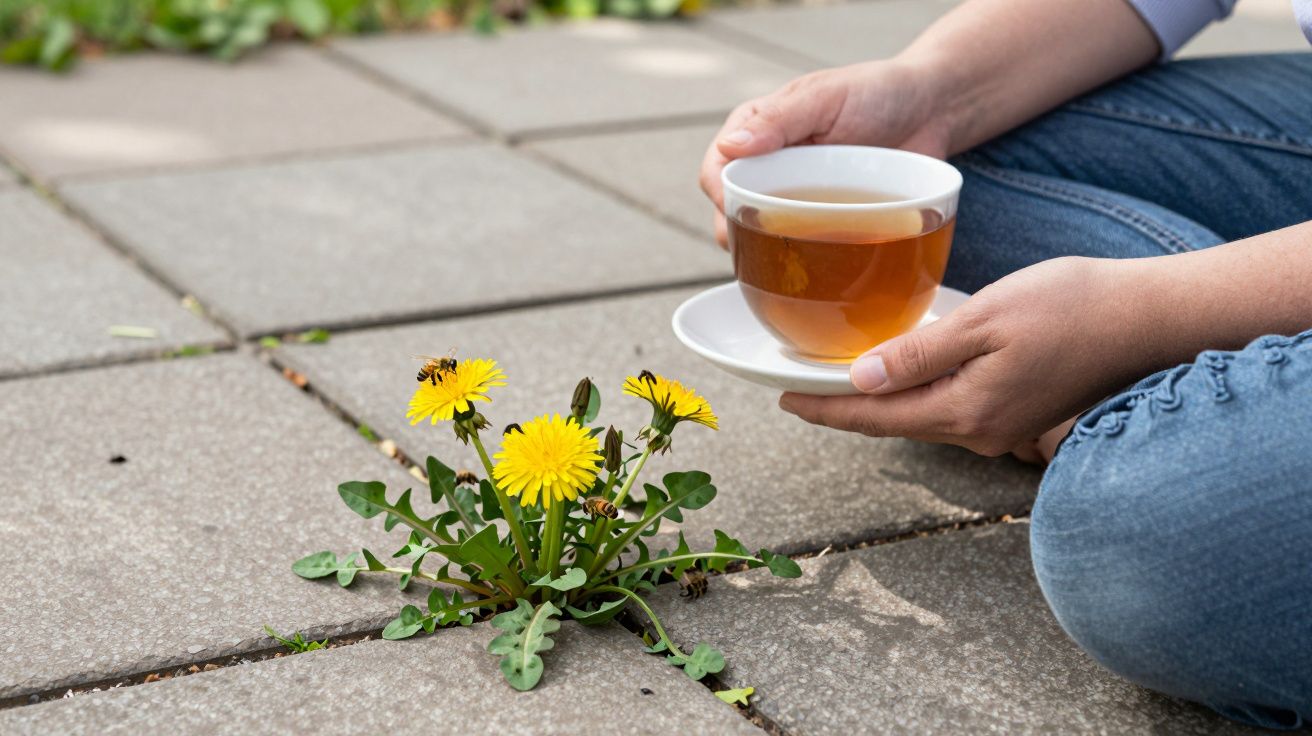
The patio looked perfect the day you finished weeding it. Every crack scraped clean, every pot refreshed, paving brushed until it almost shone. A week later, you step outside with a cup of tea, and something feels oddly quiet. The slabs are tidy, but the air is still. No lazy buzz underfoot, no small, purposeful movements between the stones.
A gardening lecturer I spoke with calls this the “polished desert phase” of many gardens. We scrub out anything that looks out of place, then wonder why bees seem to skip our patios in March and April. The space looks cared for, but to a hungry bee it might as well be concrete from fence to fence. The fix is gentler than you think: stop rescuing every paving joint.
Leaving a few so‑called weeds around the patio can be the difference between a queen bumblebee making it through spring – or not.
Why a spotless patio is hard work for hungry bees
In early spring, bees wake before the garden really gets going. Queen bumblebees emerge from hibernation when the soil warms, honeybee colonies start stretching their numbers, and solitary bees chew their way out of nests in walls and old mortar. They step into a world where blossom is still scarce, nectar runs thin, and every flower is a small lifeline.
A lecturer in horticulture put it bluntly:
“The hungriest weeks for bees often arrive before we think of the garden as ‘in bloom’.”
That’s exactly when we’re most likely to “spring clean” our patios. We pull out the dandelion that dared flower in a crack, we strip away speedwell between slabs, we blast moss and tiny flowers off with a pressure washer. It looks neat on Instagram, but it removes what little early forage there is. The patio becomes a hard landscape in every sense: beautiful to the eye, barren to insects.
Temperature swings don’t help. Paved areas warm quickly in the sun, which brings bees out to explore, but if there’s nothing to feed on nearby, they burn precious energy just searching. A few small flowers right on or beside the paving act like emergency snack stations.
The “weeds” that behave like mini filling stations
The plants we’re most inclined to tug out first are often the ones that open earliest. They’re tough, low, and opportunistic – exactly the qualities that let them flower in cool weather when fussier plants are still sleeping.
The lecturer’s short list for patio “keepers” looks surprisingly familiar:
- Dandelions – among the first bright, open flowers, rich in pollen and easy for many bee species to use.
- Ground ivy and speedwell – tiny blue or purple flowers in mats between stones; valuable for solitary bees.
- Red and white dead‑nettles – harmless look‑alikes of stinging nettles that pop up by fences and pots, offering tubular flowers for long‑tongued bees.
- Herb robert, selfheal, clover – small, scruffy and persistent, but excellent nectar sources at ankle height.
To us, they read as mess. To bees, they read as breakfast.
“If it flowers early and you didn’t plant it, assume it’s guilty of feeding something,” the lecturer joked.
You don’t need a wild jungle. A few loosened rules around the edges of the patio – a tuft here, a corner there, a strip along the step – stitch together a corridor of food that bees can use while trees and shrubs catch up.
How to make room for wild corners without losing control
This isn’t an all‑or‑nothing choice between formal paving and total neglect. You can design how “untidy” you want to be and where. The trick is to decide what you’re willing to tolerate before everything starts growing.
Try these small shifts:
- Choose your zones. Pick one or two patio edges, a corner by a drain, or a strip along the wall where you’ll let low plants flower before trimming.
- Delay the first big tidy. Instead of scrubbing everything in March, wait until late April or after most early weeds have finished blooming.
- Edit, don’t erase. Pull out truly invasive thugs (brambles in the cracks, bindweed), but leave scattered dandelions, clover and dead‑nettles to flower.
- Swap bare joints for bee‑friendly joints. In areas where you really dislike “random” weeds, deliberately sow creeping thyme, chamomile, low sedums or woolly yarrow between stones. They stay neater but still feed insects.
- Use pots as stepping stones. Containers near the patio with crocus, hellebores, grape hyacinths, lungwort or wallflowers give bees extra options within a short, energy‑saving flight.
The goal is not to abandon the patio; it’s to stop treating every spontaneous plant as a problem. You’re curating a small buffet, not hosting an invasion.
Small flowers, big impact: who eats what?
Different bees favour different flowers. Those scruffy tufts by your path might be serving very specific visitors you barely notice.
| Plant you might call a “weed” | Peak patio flowering | Who it often helps |
|---|---|---|
| Dandelion in cracks | March–April | Queen bumblebees, honeybees, early solitary bees |
| Ground ivy / speedwell mats | March–May | Small mining bees, mason bees |
| Red / white dead‑nettle near walls | March–June | Long‑tongued bumblebees, carder bees |
A gardening lecturer summed it up:
“You don’t need acres of meadow. Ten or twelve flowers in the right fortnight can matter more than a full border in June.”
Those sporadic tufts and rosettes around your paving act like tiny service stations on a long, risky journey through early spring.
Keeping bees fed and the patio usable
One of the biggest worries people voice in classes is practical: won’t a weedier patio attract wasps, look unkempt, or make life harder for children and older relatives? The answer lies in scale and timing.
You can still keep:
- Paths clear where you walk most.
- Trip hazards under control by cutting back taller plants.
- Problem species (thistles, brambles, invasive knotweed) firmly removed.
Concentrate your “kind mess” in low‑traffic corners and sunny edges, and keep anything prickly or towering away from seating areas. When early spring passes and other flowers open across the garden, you can gently reduce the patio weeds if you wish, knowing they’ve done their crucial job.
Over time, you may find yourself adjusting the balance the other way. Once you notice which bees visit which cracks, it becomes harder to uproot them without a second thought. The patio stops being just hard landscaping and starts behaving like part of the garden’s living system.
FAQ:
- Won’t leaving weeds make my whole garden get out of hand? Not if you set boundaries. Choose specific areas by the patio where you’ll allow low, flowering “weeds”, and keep the rest managed as usual. Think of them as deliberate wildlife patches, not neglect.
- Are all weeds good for bees? No. Some, like Japanese knotweed or rampant bindweed, cause more harm than good and should be controlled. Focus on low, early‑flowering species such as dandelions, clover, speedwell and dead‑nettles.
- What if my neighbours complain about a messy patio edge? You can keep the main surfaces neat and still tuck small wildlife‑friendly strips close to your house or in less visible corners. Adding a few labelled pots with “bee plants” near them often helps people see it as intentional, not careless.
- Can I do this on a balcony or tiny courtyard? Yes. Even a few pots with early bulbs, herbs that are allowed to flower (thyme, chives, mint) and a relaxed attitude to self‑sown seedlings can give bees valuable food in spring.
- Is this enough to help bees on its own? It’s one small piece of a bigger puzzle. Alongside patio weeds, aim for a mix of flowering plants from February to October, avoid unnecessary pesticides, and provide some nesting spots or undisturbed corners. Together, these small changes create real support for local bee populations.




Comments
No comments yet. Be the first to comment!
Leave a Comment